The global technology market has entered a phase of unprecedented capital concentration centered around AI infrastructure. Amazon’s ascent to a $3 trillion market capitalization serves as a critical barometer for the overall health of the digital economy, confirming that demand for cloud computing remains the primary engine of the modern industry. The battle for dominance is now shifting: the competitive frontier has moved beyond service offerings and into the realm of colossal capital expenditure.
Amazon's market capitalization has breached the $3 trillion psychological milestone for the first time, driven by a convergence of robust financial performance and surging investor confidence in the cloud sector. The company's stock hit an all-time high of $285.01, marking a gain of over 23% since the start of the year. The primary catalyst has been the explosive demand for Amazon Web Services (AWS), which has effectively become the bedrock for deploying modern artificial intelligence systems.
Recent trends highlight one of the most aggressive single-day surges in share value seen in a decade. This spike was triggered by data showing the fastest growth in cloud business in four years, prompting the company to upwardly revise its capital expenditure projections. In the current market climate, Amazon serves as a global economic bellwether, bridging two critical vectors: the consumer retail market and the high-tech AI sector.
Until recently, the market was clouded by skepticism over whether tech giants would scale back AI investments due to a lack of immediate ROI. However, financial results from Amazon and Microsoft have dispelled these fears, signaling a commitment to continued expansion. This triggered a ripple effect across other industry players; Meta Platforms, Alphabet, and Oracle also saw positive momentum, confirming a broader trend toward the consolidation of power among industry leaders.
Yet, the path to technological hegemony demands significant liquidity trade-offs. While Microsoft maintains a steady positive free cash flow (FCF) with stability projected through 2027, other giants face steeper financial hurdles. Meta reported a 91% plunge in FCF, while Alphabet and Tesla recorded negative figures for the first time. The cause is clear: billions of dollars are being poured into data center construction and the acquisition of the massive compute capacity required to train next-generation neural networks.
Today, the "$3 Trillion Club" is becoming the new standard for the Silicon Valley elite. Apple, Microsoft, Alphabet, and Nvidia have already crossed this threshold, with Nvidia—leveraging its dominant grip on the GPU market—eyeing a $5 trillion valuation. The velocity of Amazon's growth underscores a defining trend of the era: corporate valuations are no longer growing linearly, but exponentially, reflecting the market's colossal expectations for an AI-driven global transformation.

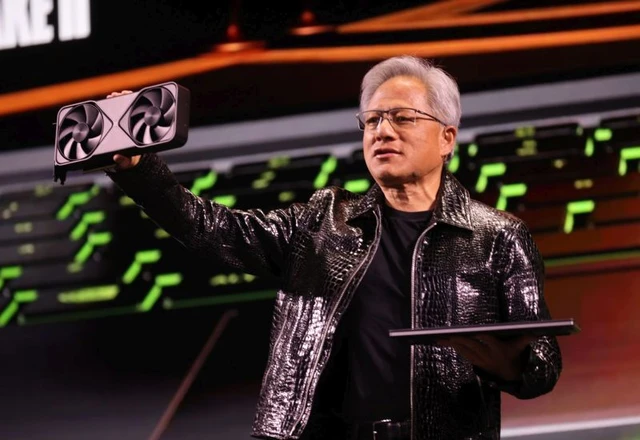 Forecasting Exponential Growth in Nvidia Shipments