The contemporary streaming device market is increasingly evolving into a clash between user autonomy and corporate hegemony. Amazon’s latest move—the introduction of Vega OS—marks a definitive pivot away from the openness of Android in favor of a tightly controlled, proprietary ecosystem. While the company officially frames this transition as a security measure against malware, the true drivers are rooted in the attention economy and the aggressive combatting of digital piracy. This strategic maneuver effectively transforms the media player from a versatile utility into a strictly curated advertising terminal.
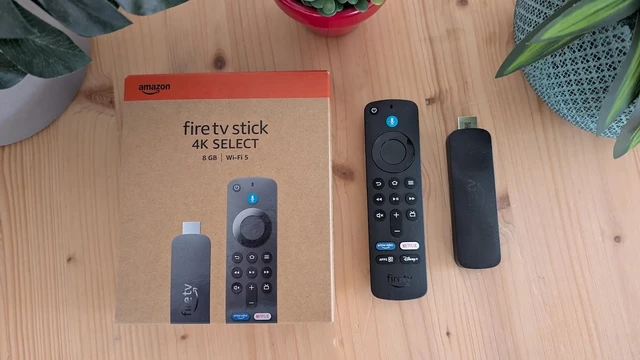
Amazon's pivot to its proprietary Vega OS—built on a Linux kernel—marks a paradigm shift for the Fire Stick lineup. Previously, these devices operated on Fire OS, a heavily modified fork of Android (AOSP). Despite its restrictions, Fire OS allowed users to sideload third-party applications, bypassing the official Amazon Appstore and transforming the sticks into versatile powerhouses capable of running software from Google Play and other independent repositories. With the introduction of Vega OS, this loophole has been slammed shut: the installation of external software is now technically impossible.
The company's official narrative, championed by Fire TV VP Aidan Marcous, centers on cybersecurity. Management asserts that third-party applications frequently serve as vectors for malware and spyware. To support this, they cite the discovery of proxy servers, antivirus flags triggered by certain streaming service APKs, and legacy incidents from 2018 where devices were compromised by botnets for covert cryptocurrency mining. However, critics point to a glaring lack of empirical data regarding mass user victimization, suggesting that other motives are driving this decision.
Amazon has also been under immense pressure from content rights holders. Entities such as Sky Sports, the English Premier League, and streaming giant DAZN have spent years accusing the company of effectively enabling systemic piracy via the Fire Stick. According to a report by Enders Analysis, the ability to install third-party software has cost the streaming industry billions of dollars, as users easily bypassed paid subscriptions through "grey market" applications.
Beyond the fight against piracy, Vega OS addresses a fundamental economic imperative. For years, Amazon sold Fire Stick hardware below cost, effectively subsidizing the devices for consumers. The sole path to monetization remained advertising and ecosystem sales. Under the open nature of Android, users could install custom launchers that completely obscured Amazon's ad-heavy home screen. A closed OS eliminates any possibility of bypassing the interface, guaranteeing that every user remains exposed to the company's promotional offerings.
However, this pursuit of security and corporate control has come at a steep cost to functionality. At its current stage, Vega OS is technologically regressive compared to its predecessor: support for USB storage and certain image quality standards, such as Dolby Vision, has either become unstable or vanished entirely. The disparity in content availability is equally stark; while Fire OS supported tens of thousands of apps, the Vega OS library is limited to just a few thousand in several regions.
Ultimately, the transition to Vega OS is less about protecting the end consumer and more about constructing a "walled garden." Amazon is striving for total vertical integration—a state where every user action is tracked and every pixel on the screen is leveraged for monetization.
 The Price of Acceleration: CXMT’s Rapid Push into Memory