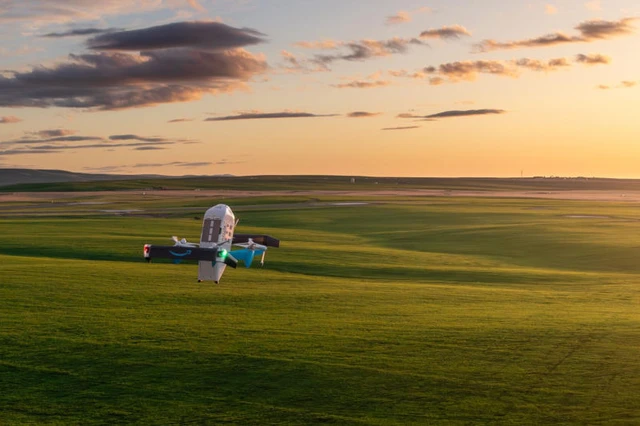
Last-mile automation has emerged as a critical frontier for modern e-commerce, where delivery velocity is the primary driver of competitive advantage. Amazon is now making a decisive move, transitioning from experimental flight trials to the deployment of a comprehensive infrastructural network. The scaling of Prime Air across hundreds of U.S. cities signals a pivotal shift: the evolution of a technological proof-of-concept into a scalable industrial standard. At the heart of this strategy is the ambition to slash delivery windows to under an hour, fundamentally reshaping consumer behavior and expectations.
Driven by a relentless pursuit of logistical efficiency, Amazon is planning to expand its drone delivery coverage nearly sixfold. By the end of the year, the company aims to reach nearly 500 locations across the United States, evolving fragmented points of presence into a unified ecosystem of autonomous transport.
The scope of this expansion targets major transportation hubs and metropolitan areas, with upcoming launches slated for Chicago, Syracuse, Cleveland, Atlanta, and Boise. While operational activity is currently concentrated in just 11 locations, each Prime Air hub is capable of servicing a substantial sector—approximately 450 square kilometers. This density allows for optimized routing and minimizes the drone's time in flight.
The service's technical parameters are tailored for the express delivery of lightweight parcels. With a weight limit of 2.3 kg, the system accommodates the vast majority of consumer orders, ranging from pharmaceuticals to small electronics. The practical results are already compelling: hundreds of thousands of orders have been processed over the past year, with the window from the "buy" click to the drone landing in a customer's garden often remaining under one hour.
However, this rapid scaling is fraught with significant challenges regarding safety and public acceptance. The rollout of Prime Air has not been without its flaws; there have been documented collisions with power lines, construction cranes, and even residential buildings. These incidents have created reputational headwinds and heightened the scrutiny of regulators.
To mitigate these risks, Amazon is implementing a cutting-edge detect-and-avoid system. This involves a comprehensive stack of sensors and algorithms that enable the drone to identify obstacles in real-time and adjust its flight path. This shift elevates safety from a secondary feature to a fundamental cornerstone of the system's architecture—a prerequisite for the mass deployment of autonomous transport in urban environments.
 Anthropic’s Strategic Push for Hardware Independence