The personal audio landscape is pivoting rapidly toward the deep integration of artificial intelligence and adaptive systems. Apple continues to fortify its ecosystem, evolving its accessories from mere playback devices into sophisticated cognitive interfaces. The debut of the AirPods 5 marks a pivotal milestone in the democratization of premium noise cancellation; capabilities once reserved exclusively for flagship models are now becoming the baseline standard for the broader consumer market.
The arrival of the AirPods 5 is a natural extension of the latest flagship ecosystem update, complementing the iPhone 18 Pro and the innovative iPhone Duo foldable. In this new generation of wireless earbuds, Apple has pivoted away from radical aesthetic changes, focusing instead on a profound modernization of the internal hardware and algorithmic foundation. The strategy rests on three primary pillars: noise cancellation efficiency, battery longevity, and intelligent user interaction.
The leap in Active Noise Cancellation (ANC) technology is striking: the new devices are capable of neutralizing up to 50% more external noise than their predecessors. This milestone was achieved through the implementation of a multi-port acoustic architecture and a complete overhaul of the signal processing algorithms. Coupled with an enhanced Transparency mode—which now renders ambient voices with greater naturalism—the earbuds create a flexible sonic barrier, allowing the user to switch instantaneously between total isolation and mindful spatial awareness.
The performance of the Adaptive EQ deserves particular scrutiny. Leveraging an updated acoustic circuit, the system dynamically tunes the frequency range to match the unique anatomical nuances of each user's ear canal. This ensures a rich, detailed soundstage regardless of the listener's physical characteristics, effectively solving the problem of acoustic perception variability in the mass market.
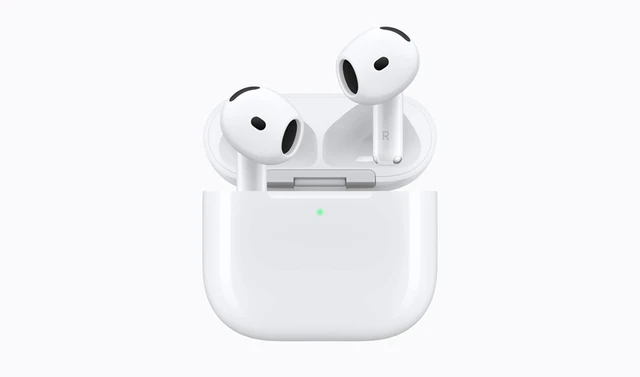
The AirPods 5 lineup is bifurcated into two versions, distinguished by their feature sets and pricing. The base model, priced at $129, offers the core suite of capabilities. The premium version, retailing at $149, elevates the user experience by integrating force sensors into the stems, enabling volume control via haptic commands. Furthermore, the higher-end model features a wireless charging case and an extended power reserve.
The intelligence layer of the devices is defined by "Adaptive Audio" and "Conversation Awareness." The system analyzes the acoustic environment in real-time, automatically balancing the transition between Transparency mode and ANC. When the user begins to speak, the earbuds instantly attenuate content volume, ensuring a seamless transition to live interaction. However, the standout innovation is the support for real-time translation. When paired with an iPhone powered by Apple Intelligence, the AirPods transform into a personal linguistic terminal, dissolving language barriers in real-time.
In terms of power efficiency, the premium model provides up to five hours of continuous playback with ANC enabled, with a cumulative runtime of 22 hours including case charges. Charging versatility is handled via a USB-C port, Qi standard support, and compatibility with Apple Watch chargers.
Ultimately, the AirPods 5 transcend their role as mere audio accessories. Integration with Siri AI and hands-free orchestration turn them into a comprehensive tool for managing the digital environment. This represents a strategic move by Apple to create a seamless interface where sound becomes the primary conduit of interaction between humans and artificial intelligence.
Pre-orders are now live, with general availability beginning September 18.
 A Comprehensive Refresh of Apple's Global Product Portfolio