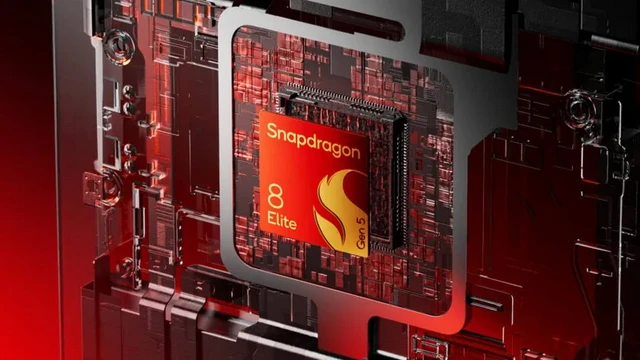
The mobile industry is decisively pivoting away from the pursuit of raw horsepower, ushering in an era of intelligent optimization. Qualcomm is cementing this transition within its upcoming flagship SoC, integrating technologies once reserved exclusively for high-end desktop GPUs. At the heart of this evolution is the synergy between neural networks and graphical rendering—a strategic marriage designed to resolve the perennial tension between visual fidelity and power efficiency. This paradigm shift promises to fundamentally redefine the user experience in mobile gaming.
The evolution of Snapdragon mobile platforms is increasingly defined by the deep integration of artificial intelligence directly into the graphics stack. While the industry buzzes over the impressive benchmarks of the new Oryon cores—capable of hitting frequencies up to 5 GHz with the innovative FlexCache system—the real technological breakthrough lies hidden within the updated Adreno GPU.
The centerpiece of this innovation is the introduction of specialized matrix engines. Three such blocks now operate in tandem to power Adreno Neural Fusion. Essentially, Qualcomm is porting the concept of deep-learning-based image upscaling—akin to Nvidia's DLSS—to the mobile ecosystem. Neural Fusion handles the elimination of visual artifacts, such as flickering and ghosting, while simultaneously enhancing overall frame detail.
The most significant outcome of this approach is energy efficiency: leveraging neural networks for image reconstruction allows for a 40% reduction in power consumption compared to previous upscaling methods, such as Snapdragon Game Super Resolution. This ensures that devices can maintain high frame rates and resolutions without triggering rapid thermal throttling or excessive battery drain.
The integration of these solutions has already moved beyond theoretical development. Support for Adreno Neural Fusion has been implemented in industry-standard engines like Unreal Engine and Unity, ensuring a seamless transition for modern titles to leverage the chip's new capabilities. Notably, Qualcomm is not alone in this trajectory; Xiaomi, for instance, has similarly prioritized neural accelerators within the Arm G2-Ultra NX GPU of its XRing 03 processor. It is evident that hardware-accelerated AI within graphics cores is becoming the defining trend for next-generation mobile silicon.
The technical architecture of the new Adreno GPU has also undergone a fundamental shift. It now employs a three-layer structure where shader cores and auxiliary blocks are segmented. This organization allows the system to manage power delivery with far greater precision and dynamically balance performance based on workload, eliminating redundant energy consumption.
On the hardware front, the GPU clock speed has been pushed to 1.45 GHz, a notable increase over the 1.2 GHz found in the Snapdragon 8 Elite Gen 5. While the capacity of the Adreno High Performance Memory remains at 18 MB, its efficiency has been boosted by 12%—a critical improvement for handling heavy textures and complex scenes. Rounding out the package is an overhauled communications stack: the integration of the Qualcomm X105 modem and the FastConnect 8800 system, ensuring the stable, high-speed data exchange essential for modern cloud services and multiplayer gaming.
 Intel’s Strategic Play for Advanced Packaging Supremacy