The software development industry is witnessing a paradigm shift in the economics of code production. The transition from fixed licensing to consumption-based pricing models is transforming compute resources into one of the most significant line items on corporate balance sheets. According to projections from Gartner, the cost of AI tokens may soon rival or even surpass the payroll expenses of engineering teams. In this new landscape, development efficiency is no longer merely a question of raw technical talent; it has evolved into a rigorous exercise in financial management.
The software development market is currently undergoing a fundamental shift in business models. The traditional SaaS approach—characterized by fixed per-seat pricing—is giving way to real-time resource consumption. Burdened by staggering infrastructure and training costs, LLM providers are pursuing profitability through dynamic pricing. Consequently, enterprises are no longer paying simply for access to a tool, but for every token generated, introducing significant financial volatility into the operational budget.
Analysts point to a troubling trend: within the next two years, token expenditures could rival the average monthly salary of a software engineer. While a global average of $2,000 might seem manageable, the reality in major tech hubs and large corporations is far more severe. In some instances, a single developer's or power user's monthly AI spend can soar to $20,000 or even $32,000, transforming AI tools into high-cost assets with unpredictable billing cycles.
The core issue lies in a lack of transparency and the absence of mature cost-optimization mechanisms. Many organizations have pivoted from experimentation to the large-scale deployment of AI agents, underestimating the cost of "bloated" context windows and the inherent complexity of agent-managed workflows. This has created a perilous gap: token consumption is skyrocketing, yet this does not always translate into a proportional increase in productivity.
This is where the concept of context engineering becomes paramount. In contrast to "vibe-coding"—an intuitive and often redundant interaction with AI—conscious context management allows for cost reduction without sacrificing quality. The ability to provide a model with only relevant, synthesized information is becoming a critical skill, impacting not only corporate budgets but also an engineer's professional market value.
Simultaneously, efficiency metrics are being redefined. The traditional "lines of code" metric has lost all meaning in an era where AI can generate entire libraries instantaneously. Value is now measured by time-to-market, the compression of the feedback loop between development and business stakeholders, and overall end-user satisfaction.
To prevent runaway costs, a transition to rigorous governance models is essential. This entails implementing consumption thresholds, automated monitoring, and clear escalation policies for limit breaches. Strategically, this requires categorizing tasks by autonomy levels—ranging from human-led operations to fully autonomous agents.
An optimal approach involves hierarchical model selection. Routine, low-complexity tasks should be delegated to smaller, efficient models, while expensive "frontier" systems are reserved exclusively for high-value, complex problem-solving. This differentiated strategy balances raw performance with economic viability.
The industry is already adapting to these realities. In Silicon Valley, compute budgets are becoming a standard part of compensation packages; candidates are beginning to negotiate their token limits just as they would stock options or health insurance. Concurrently, companies are implementing internal resource accounting per employee to identify and eliminate inefficient AI usage patterns.
Ultimately, integrating AI into development can yield productivity gains of up to 20%—a significant result. However, this dividend will only be realized by organizations capable of evolving AI usage from a spontaneous process into a disciplined engineering practice.

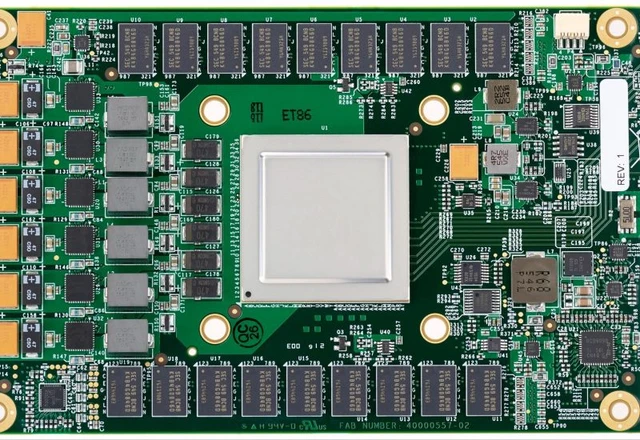 Anthropic’s Strategic Push for Hardware Independence