The line between the text editor and the comprehensive AI assistant is effectively vanishing, transforming the development environment into an orchestrator of intelligent workflows. With the release of version 1.129, Microsoft is fundamentally reimagining its approach to large language model integration—elevating them from mere extensions to autonomous services. Tools such as Copilot and Claude now possess their own lifecycles, operating independently of active windows or interface states. This evolution signals a pivotal shift: moving beyond simple chatbots toward sophisticated software agents capable of true multitasking and deep contextual analysis.
The defining shift in the latest iteration of VS Code is the introduction of Agent Host—a dedicated process designed specifically for AI agents such as Copilot, Claude, and Codex. Previously, agent logic was tightly coupled with the extension host process, creating a critical dependency where neural network operations were bound to the lifecycle of a specific editor window and frequently competed for system resources with other plugins.
Interaction is now handled via the open Agent Host Protocol (AHP). This approach allows session state to be maintained on the host side, enabling developers to connect to a single active session across multiple windows simultaneously. Furthermore, this architecture paves the way for remote execution: an agent can operate directly on the server where the project resides, while the user interacts with it via a local interface. At this stage, the feature is being rolled out incrementally and can be activated via the chat.agentHost.enabled setting.
This structural overhaul has enabled a sophisticated session management mechanism. Agents have evolved beyond linear conversationalists; they can now analyze active task lists, monitor the state of other sessions, and—most crucially—spawn independent sub-tasks within new contexts. This transforms development into a hierarchical workflow: the primary objective remains in the main chat, while specialized, autonomous components are delegated to separate agent sessions. To ensure security, these actions require explicit user confirmation, while built-in constraints prevent uncontrolled process proliferation.
Parallel to these internal shifts, the user experience is undergoing its own evolution. An experimental "Agents" window introduces an integrated panel where chat, open files, and change logs converge into a single workspace. Diff views (version comparisons) are now positioned directly alongside the conversation, supporting both inline and side-by-side modes. Crucially for long-term refactoring cycles, the state of this panel persists even after a window restart. This mode is activated via the sessions.layout.singlePaneDetailPanel setting.
AI integration has become more profound and pragmatic. Developers can now execute terminal commands directly from the chat using the ! prefix. For instance, running !npm test triggers immediate execution, eliminating the friction of switching between windows.
A significant move toward openness is the support for the Bring Your Own Key (BYOK) concept. Users can now integrate their own API keys via Agent Host, granting greater flexibility in selecting specific LLM versions and managing costs. Simultaneously, user prompts are migrating from *.prompt.md files to "skills"—a transition from simple text instructions to structured agent competencies that are far easier to scale and maintain.
For the corporate sector, full support for GitHub Enterprise has been added. Copilot authentication is no longer exclusively tied to the public github.com cloud, allowing organizations to leverage their own platform instances while retaining all Agent Host capabilities.
The update concludes with targeted refinements to the interface and data handling logic. Specifically, the mechanism for selecting editors during merge conflict resolution has been overhauled; change previews are now decoupled from the file itself, enabling the use of the built-in text diff editor even for files handled by specialized extensions. Additionally, a preview of the "Modern UI" (workbench.experimental.modernUI) provides a glimpse into the future visual overhaul of the entire workspace.
Collectively, these enhancements transition VS Code from a mere code editing tool into a comprehensive platform for agentic development—one where AI serves not just as an assistant, but as an autonomous participant in the product creation process.
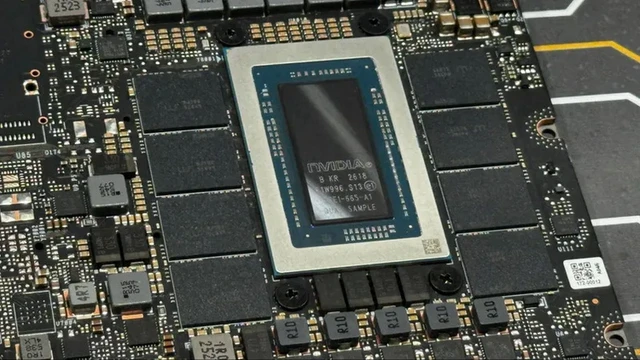 Nvidia N1X and the New Era of Arm PCs