For years, the global AI arms race has been defined by access to compute from a single dominant vendor. The industry’s systemic dependence on Nvidia GPUs created a technological ceiling that, for many players, appeared insurmountable. The debut of Meituan’s LongCat 2.0 fundamentally upends this dynamic, demonstrating that ultra-large-scale models can indeed be forged on alternative hardware. This release transcends mere technical achievement; it serves as a strategic manifesto for technological sovereignty.
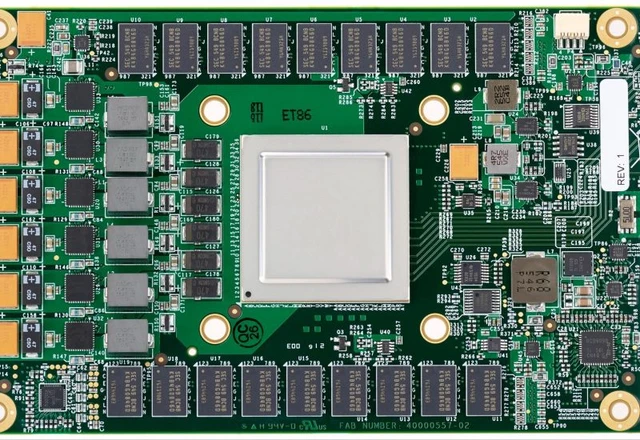
Developing a model with a trillion parameters requires more than just colossal volumes of data; it demands flawless synchronization across thousands of compute nodes. Meituan approached this challenge systematically, investing in its own proprietary AI infrastructure over the course of three years. The result is LongCat 2.0—the first model of this magnitude trained entirely on Chinese silicon. While the chip manufacturer has not been officially named, technical specifications point toward the use of approximately 50,000 Huawei Ascend 910C units.
The primary hurdle when managing hardware at this scale is the stability of distributed systems. Industry consensus suggests that as a cluster grows, the probability of cascading failures increases proportionally. LongCat's engineers managed to reduce critical error rates by 70%, enabling an impressive throughput of one trillion tokens per day.
From a technical standpoint, the model is a sophisticated hybrid. While total parameters reach 1.6 trillion, the implementation of a Mixture of Experts (MoE) architecture ensures that only 48 billion parameters remain active during any single request. This allows the model to balance deep knowledge with acceptable generation speeds. Training was conducted on a corpus of 35 trillion tokens, with a significant portion of the data featuring context windows up to one million tokens—volumes of memory and processing that previously required complex engineering workarounds even when using flagship Nvidia GPUs.
The internal architecture of LongCat 2.0 is particularly noteworthy. The developers implemented massive n-gram embeddings, which account for nearly 10% of the model's total parameter volume (a figure that climbs to nearly half in the experimental Flash-Lite version). To manage these data volumes, they deployed "6D parallelism"—a multidimensional approach to distributing computations across chips. Furthermore, the sparse attention system based on DSA was deeply overhauled to optimize the processing of long text sequences.
The model underwent stealth testing on the OpenRouter platform under the codename "Owl Alpha." Testing results indicate that while LongCat 2.0 is not a revolutionary leap in raw intelligence or logic, it demonstrates high stability and predictability in its responses.
Currently, the model is accessible via API with pricing set at $0.75 per million input tokens and $3 per million output tokens. Although this cost is higher than many local competitors, the real headline is the decision to release the model under Apache 2.0 or MIT licenses. This establishes LongCat 2.0 as the first open-source "trillion-parameter" model built entirely on a non-Nvidia stack.
Ultimately, LongCat 2.0 is more than just another text generation tool. It serves as proof that architectural constraints and hardware sanctions can be overcome through deep software optimization and the scaling of alternative hardware. China has demonstrated that the path toward AGI systems can exist independently of Western semiconductor giants.

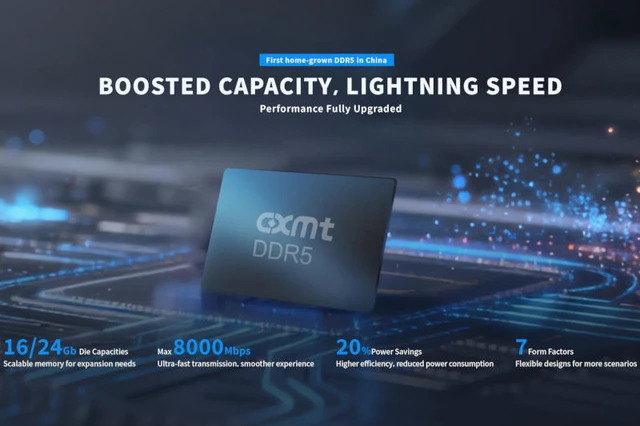 The Price of Acceleration: CXMT’s Rapid Push into Memory