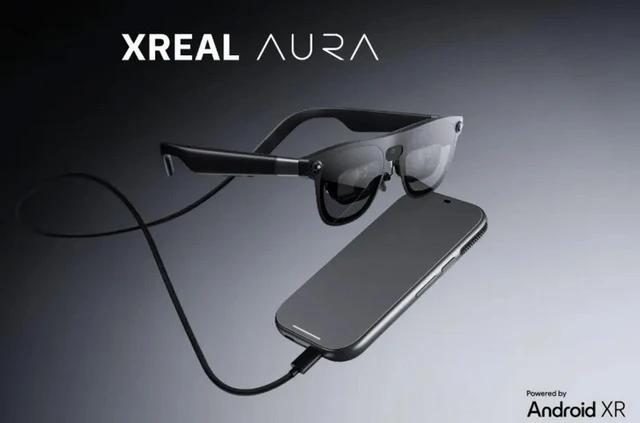
The quest for the ultimate wearable is entering a new epoch, as cumbersome headsets yield to the familiarity of classic eyewear. The strategic alliance between Google and Xreal has culminated in the Aura—a device engineered to dissolve the boundary between haute couture and cutting-edge spatial computing. Powered by the dedicated Android XR platform, these glasses aim for a seamless synthesis of digital overlays and physical reality. While the market remains in suspense awaiting final pricing, the device's technical prowess promises to fundamentally challenge existing augmented reality paradigms.
The mixed reality industry has long been constrained by the limitations of form factor: users were forced to choose between the stripped-down utility of lightweight glasses or the raw power and cumbersome bulk of massive headsets. The arrival of the Xreal Aura, developed in close partnership with Google, represents a concerted effort to bridge this divide. The device's concept is elegantly simple: to engineer a fully realized XR headset that looks and feels like a standard pair of eyeglasses.
The technological cornerstone of the Aura is the Android XR operating system. This is far more than a mere adaptation of a mobile interface; it is a specialized environment optimized specifically for spatial computing. Within the Google ecosystem, this device will be the second major implementation of the new OS, following the ambitious Samsung Galaxy XR headset slated for an October 2025 release. While Samsung is targeting the ultra-premium segment with an expected price tag of $1,799, the Xreal Aura is positioned for greater accessibility and everyday integration.
The device's engineering execution is impressive in its compactness, with a total weight not exceeding 95 grams—a critical threshold for ensuring long-term comfort during extended use. At the core of the system lies Qualcomm's latest Snapdragon Reality Elite processor. This silicon was designed specifically for XR hardware, where every milliwatt of power and every square millimeter of thermal headroom is critical. The synergy between this hardware and the Android XR software stack is intended to deliver not only high performance and intelligent data processing but also radically optimized power consumption—the perennial "Achilles' heel" of wearable electronics.
The go-to-market strategy is intriguing and calculatedly opaque. Google and Xreal have opened pre-orders by inviting users to place a $99 deposit, while the final retail price remains a closely guarded secret. This tactic allows the companies to gauge market appetite while cultivating an aura of exclusivity around the product. Best Buy has been named the primary strategic distribution partner in the U.S., offering early adopters a discount structure that could significantly lower the final cost for year-end purchases.
The official rollout of the Xreal Aura is expected this autumn across several key regions: the US, UK, Japan, Canada, and South Korea. This launch will serve as a critical litmus test to determine if the mass market is truly ready to transition from handheld smartphones to interfaces integrated directly into the user's line of sight.
 The Visual Minimalism of Apple's New Keyboards