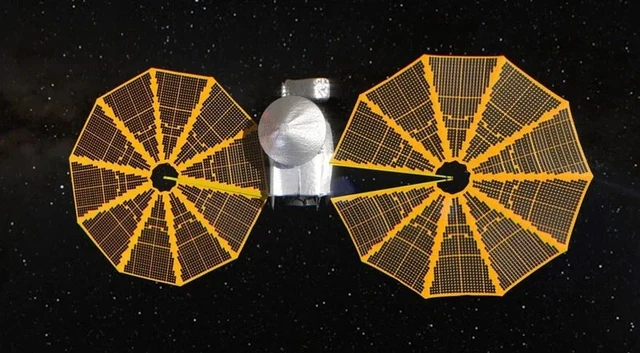
The secrets of the early evolution of the Solar System lie hidden in the distant reaches of Jupiter's orbit. NASA’s Lucy mission represents a bold endeavor to reconstruct the chronology of our world's formation through a form of "cosmic archaeology." The spacecraft is currently entering a pivotal phase: the calibration of its optical systems ahead of its encounters with the Trojan asteroids. In this high-stakes environment, the precision of exposure settings becomes the deciding factor between a fundamental scientific breakthrough and the irrevocable loss of priceless data.
The study of Trojan asteroids—objects orbiting Jupiter in two dense clusters—demands an extraordinary level of instrumental precision. Scientists view these celestial bodies as "time capsules," preserving the primordial composition and structure of the matter from which our planetary system first coalesced. To maximize the utility of this resource, the Lucy mission team has begun fine-tuning the probe's cameras, analyzing test imagery captured back in the spring.
The primary technical hurdle lies in the specifics of the lighting geometry. When Earth-based telescopes observe Trojans, they view them essentially from the direction of the Sun, creating a "full moon" effect—a uniformly illuminated surface. Lucy, however, occupies a different spatial orientation. During its close flybys, the spacecraft will encounter side-lighting, which produces deep, stark shadows. In such conditions, the margin for error narrows: an overly short exposure would leave dark regions of the surface pitch black, while excessive exposure would blow out the illuminated zones, erasing critical detail.
To mitigate this, NASA utilized the L’LORRI high-resolution camera. At this stage, the instrument was trained on four future targets: the asteroids Eurybates, Polymele, Leucus, and Orus. Although they currently appear as mere faint points against the stellar backdrop, this preliminary imaging allows engineers to calibrate optimal sensor parameters.
The upcoming encounter schedule is grueling, leaving zero margin for error. The first target will be Eurybates in August 2027, followed by Polymele. In 2028, the probe will visit Leucus in April and Orus in November. The dynamics of these encounters are staggering: at a minimum distance ranging from 480 to 970 km, the probe will be screaming past its targets at approximately 25,700 km/h. Within this narrow window of opportunity, Lucy must capture images across both visible and infrared spectra while conducting a series of physical measurements.
The calibration process has already surfaced distinct optical artifacts that must be accounted for during data processing. For instance, while imaging the asteroid Leucus, stray light from the star 28 Hydra entered the frame, creating bright streaks and oval flares. Similarly, images of Orus captured a faint arc caused by solar glare. Such interference allows NASA engineers to further refine instrument operating modes as the probe closes in on its targets.
The symbolism of the mission is embedded in its very name: Lucy is named after the prehistoric human ancestor whose remains found in Africa revolutionized our understanding of anthropogenesis. Just as the discovery of Lucy helped unlock the origins of humanity, this NASA probe is designed to reveal the genesis of our solar system, effectively turning astrophysics into a form of cosmic-scale archaeology.
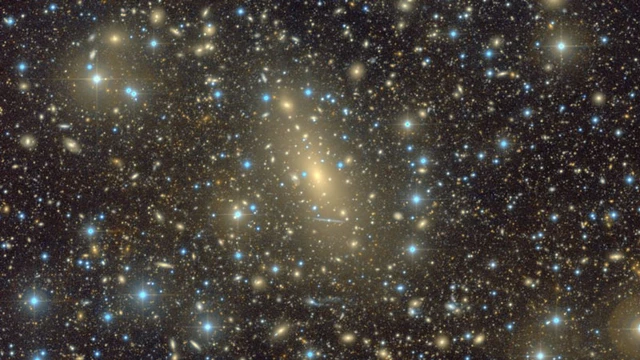 The Phenomenon of the Supermassive Galaxy IC 1101