The boundary between pure artificial intelligence and its physical manifestation is rapidly dissolving. Having cemented its dominance in the realm of large language models, OpenAI is now pivoting toward the aggressive development of its own hardware ecosystem. The move of Paul Mid, an Apple VP and a key architect behind the Vision Pro, marks a watershed moment in this global arms race. This is more than a mere executive hire; it is a strategic consolidation of the industry's premier design and engineering talent, all orbiting a central AI core.
The high-tech industry is witnessing a significant migration of talent from Cupertino to San Francisco. In a strategic bid to expand beyond chatbots and cloud computing, OpenAI is assembling a "dream team" of former Apple executives. Following the recruitment of the legendary Jony Ive, it became clear that the startup is aiming to develop a device capable of redefining the paradigm of human-computer interaction. Now, Paul Mead—the man who steered the development of Apple's most ambitious wearables in recent years—is joining the fold.
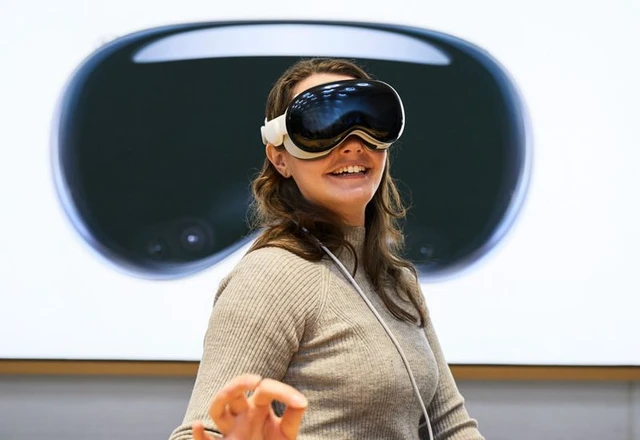
Paul Mead's trajectory at Apple serves as a blueprint for the evolution of modern consumer electronics. Since 2010, he played a pivotal role in the creation of the iPad, and from 2012, he oversaw the iPhone program, gaining deep expertise in scaling sophisticated hardware ecosystems. However, the true extent of his influence became evident in 2017 when he joined the Vision Products Group, eventually taking the helm of the division's entire hardware development in 2019. Under his leadership, the Vision Pro headset was born—Apple's attempt to carve out a new category of devices blending augmented and virtual reality.
Beyond the high-profile Vision Pro, Mead managed several clandestine, forward-looking projects. His portfolio included the development of display-less smart glasses designed to offer a fundamentally different way of interacting with a system, as well as a long-term project for full-scale AR glasses, not expected to hit the market until the end of the decade. This extensive experience with AI-driven wearables makes Mead the ideal candidate for OpenAI, which is now seeking a way to manifest its algorithms within an elegant and functional form factor.
Mead's transition to OpenAI is no isolated incident. He is reuniting with former Apple colleagues Jony Ive, Tang Tan, and Evans Hankey. This group of specialists previously founded their own startup, which OpenAI acquired for a staggering $6.5 billion. Consequently, OpenAI is establishing a comprehensive engineering hub capable of replicating Apple's signature alchemy in industrial design and ergonomics, but with a fundamentally different software philosophy—one where generative intelligence, rather than an operating system, sits at the core.
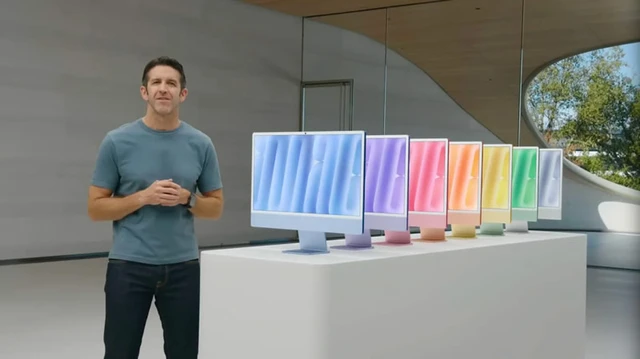
Within Apple, this departure may be indicative of deeper structural shifts. Against the backdrop of an impending CEO transition and the appointment of John Ternus to the post in September, the company's leadership is experiencing a period of volatility. Many vice presidents are feeling their positions weaken within the new hierarchy.
For Apple, the loss of Paul Mead could prove painful. Despite being a technical tour de force, the Vision Pro has yet to achieve mass-market adoption, leading to constant revisions of priorities and strategies for the AR division. While Cupertino struggles to find the right path in augmented reality, OpenAI—by consolidating the expertise of Apple's top engineers—may attempt to leapfrog the iterative process and create the definitive natural interface for the era of artificial intelligence.
Mead's responsibilities at Apple are temporarily transitioning to Fletcher Rothkopf, another key contributor to the Vision Pro. However, the scale of this talent migration suggests that the gravitational center of "smart hardware" development is shifting away from traditional corporations toward the AI giants.
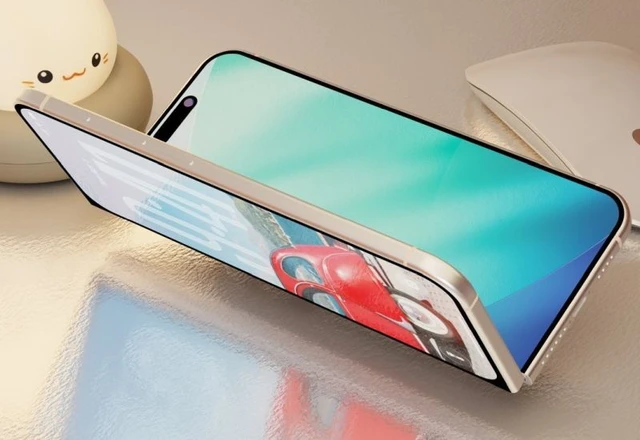 The Phenomenon of the Foldable iPhone Ultra