Today's digital landscape demands a paradigm shift in data storage, as public cloud services are no longer viewed as the sole reliable solution. Against this backdrop, Xiaomi's foray into the Network Attached Storage (NAS) market appears to be a natural evolution in the expansion of its smart home ecosystem. However, the tech giant is adopting an unconventional strategy, framing the debut of its first NAS as a calculated market experiment. The device's ultimate viability now hinges not on manufacturing capacity, but on the genuine appetite of the community.
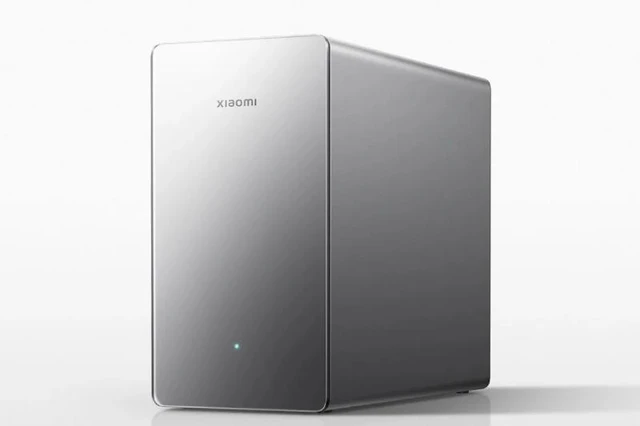
The concept of Network Attached Storage (NAS) has long evolved beyond the niche domain of system administrators and tech enthusiasts. Today, it serves as a comprehensive command center for a digital life—ranging from automated family photo backups to the deployment of personal media servers. Seeking to create a closed-loop ecosystem for its services, Xiaomi has introduced Smart Storage, its first specialized network storage solution designed to act as the definitive "hard drive" for the entire smart home.
The intrigue lies in the product's go-to-market strategy. Rather than a traditional mass release, Xiaomi has opted for a crowdfunding model. The campaign, launching in early July, effectively serves as a demand validation mechanism: the device will only enter serial production if a specific financial milestone is reached. This approach allows the company to mitigate risks associated with inventory surplus while simultaneously testing whether the mass consumer is ready to pivot from renting cloud space to owning their own hardware.
Technically, the Smart Storage is built around a dual-disk configuration, the industry benchmark for home systems and small businesses. This architecture enables the implementation of RAID arrays to ensure data redundancy, guaranteeing that the failure of a single drive does not result in catastrophic data loss.
The lineup consists of three modifications, clearly segmented by user needs:
The entry-level Beginner version offers 4 TB of storage (two 2 TB drives). During the funding phase, it is available for 2,299 yuan ($338), while the price will rise to 3,499 yuan ($514) after the official launch. This solution is tailored for those who only require a simple document archive and basic smartphone backups.
The mid-range Advanced model provides 8 TB of capacity (2 × 4 TB). The crowdfunding price is 2,899 yuan ($426), with a retail price set at 4,499 yuan ($661). This capacity makes the device an attractive option for storing high-resolution media libraries.
For professional workloads and small enterprises, the Professional version offers 16 TB (2 × 8 TB). Its campaign price is 4,699 yuan ($690), whereas the retail price will be 6,999 yuan ($1,028).
While the hardware configurations are well-defined, the software remains a "black box." Xiaomi has yet to disclose details regarding the storage operating system, remote access capabilities, or integration with existing Mi Home services. In the NAS world, software is typically the primary determinant of success: the intuitiveness of the interface, file indexing speed, and access security determine whether a device becomes a powerful tool or an expensive paperweight.
The question of global expansion remains open. Xiaomi has provided no hints regarding a rollout of Smart Storage beyond the Chinese market. Given the specifics of local cloud services and data protection legislation, adapting the product for international markets may require a significant software overhaul. Nevertheless, if the crowdfunding campaign proves successful, we may see a formidable player enter the personal storage segment, capable of challenging established leaders through competitive pricing and deep integration into the smart home ecosystem.
 The Phenomenon of the Foldable iPhone Ultra