The convergence of biological systems and microelectronics is ushering in a new era of autonomous agents engineered for extreme environments. Conventional robotics has long struggled with energy efficiency and constrained maneuverability when navigating complex terrains. The solution lies in biohybrid platforms—architectures where a living organism serves as the primary actuator, while microelectronics provide the command-and-control framework. Recent breakthroughs by researchers in Singapore and Japan are pushing these technologies to the next frontier, enabling insect-cyborgs to navigate and master aquatic environments.
Contemporary bionics seeks to leverage nature's most refined engineering solutions to overcome the inherent limitations of silicon chips and servomotors. Researchers at Nanyang Technological University have turned their attention to the Madagascar hissing cockroach (Gromphadorhina portentosa). This species was selected for its exceptional endurance, lack of wings, and sufficient physical scale, which allows for the integration of a comprehensive control unit without critically compromising the insect's mobility.
The primary advantage of such bio-hybrids lies in a radical reduction in power consumption. While miniature robots require cumbersome battery packs to drive electric motors, the cyborg cockroach relies on its own musculature and metabolism. The electronic system merely modulates the direction of movement via implanted electrodes, making the device orders of magnitude more efficient than any mechanical analog.
However, the deployment of these systems in disaster zones or sealed industrial facilities inevitably encounters the obstacle of water barriers. For a standard insect, submersion leads to rapid respiratory failure. Unlike fish or specialized aquatic insects, cockroaches obtain oxygen through a system of tracheae and spiracles, which are incapable of extracting dissolved gases from water. To transform this terrestrial scout into a fully capable diver, the team had to develop specialized protective gear.
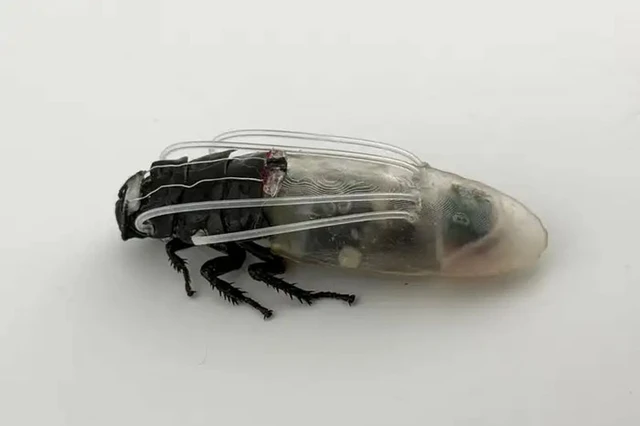
The engineering solution proved to be both elegant and minimalist. The "diving suit" consists of a flexible, waterproof chassis and an autonomous life-support system. The centerpiece is a 3D-printed chemical oxygen generator. Inside the reservoir, hydrogen peroxide is decomposed into water and pure oxygen through the action of a manganese dioxide ($\text{MnO}_2$) catalyst. The resulting gas is delivered directly to the insect's thoracic spiracles via four silicone tubes. This architecture eliminates the need for complex regulators or heavy pressurized tanks, maintaining the overall lightness of the construction.
Empirical trials have confirmed the efficacy of the design. While a typical insect loses mobility in water within a minute, the suited cyborg maintains full viability and responsiveness to remote commands for two to three hours. Notably, the hydrodynamic drag of the suit had a negligible impact on velocity: while land speed was measured at 87.5 mm/s, underwater speed only dropped to 78.4 mm/s, with significant deceleration occurring only during sharp turns.
To validate the system in conditions mirroring real-world catastrophes, a test range was constructed in the form of a 1.7-meter tunnel. The route included flooded sections and zones with high concentrations of carbon dioxide. In a series of independent tests, the bio-hybrid platforms successfully navigated all obstacles, proving their viability for search-and-rescue operations in highly aggressive environments.
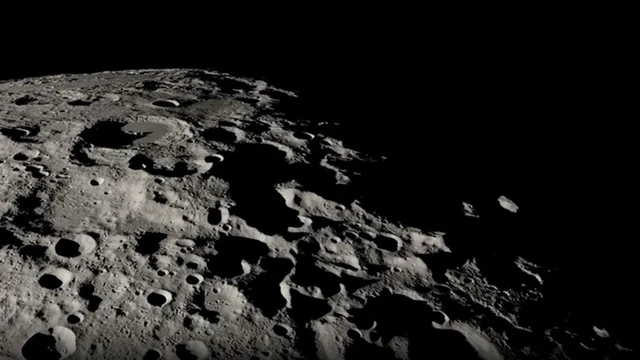
Yet, underwater reconnaissance is merely an intermediate milestone. The developers' ambitions extend far beyond Earth's oceans. The researchers plan to create specialized space suits capable of shielding bio-hybrid agents from the vacuum and extreme cold of the cosmos. Such advancements could transform cyborg insects into the ideal scouts for exploring the surface of Mars or other celestial bodies, where the synergy of biological adaptability and precision digital control will be the decisive factor for success.
 The Evolution of Solid-State Batteries: From Smartphones to Electric Vehicles