The foldable device market is transitioning from a period of experimentation into a phase of mature technological rivalry. Xiaomi enters this arena with the 18 Fold, designed as a direct response to the anticipated debut of Apple's foldable iPhone. In this device, the company has fused daring ergonomics with cutting-edge memory standards and raw computational power. This is not merely another smartphone, but a concerted effort to redefine the fundamental interaction between the user and the mobile interface.
Xiaomi's engineering philosophy for its latest flagship centers on the concept of "balanced folding." The manufacturer has deliberately sought the sweet spot between compact clamshells and cumbersome book-style devices. The result is a handset featuring a 5.38-inch external display and a 7.58-inch internal screen. Particular attention has been paid to proportions: the 2:1 aspect ratio mimics a traditional sheet of paper, making reading and document handling feel intuitive. Simultaneously, the external screen is optimized for one-handed operation, with the virtual keyboard width increased by 8% compared to standard 6.9-inch panels, significantly reducing typing errors.
The device's physical footprint is impressively sleek. When unfolded, the chassis measures just 5.02 mm thick, increasing to 10.68 mm when folded, with a total weight of 219 grams. The visual aesthetic is defined by a flat frame with soft-touch edges and a distinctive rear camera module reminiscent of a racing circuit.
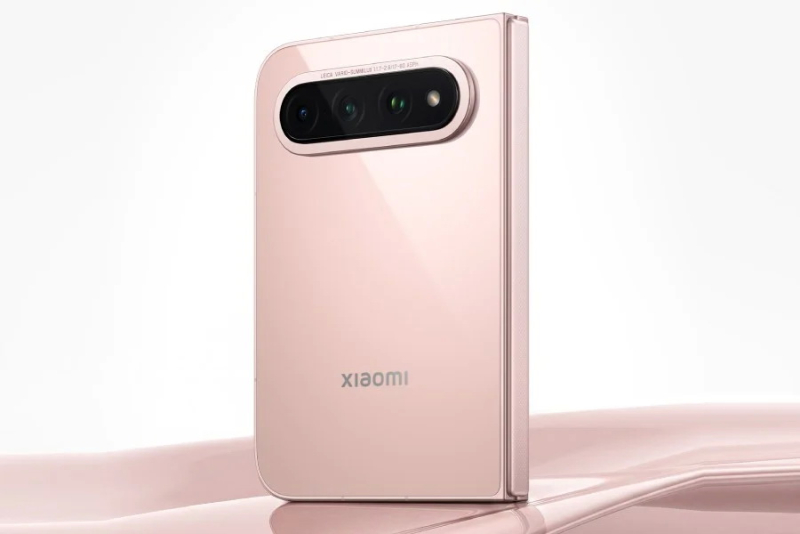
Structural integrity was a primary focus during development. To address the Achilles' heel of foldables—fragility—Xiaomi has implemented a comprehensive reinforcement suite. This is anchored by the Dragon Bone Hinge, paired with a 7-series aluminum alloy frame and Dragon Crystal Glass 3.0. The foldable display is protected by dual-layer UTG (Ultra Thin Glass), and the entire unit has undergone 492 stress-test cycles, guaranteeing resilience against drops from heights of up to 1.2 meters.
At the heart of the device lies the proprietary Xiaomi Xring O3 chip. This is the first flagship processor with deep AI integration to surpass the five-million-point milestone in AnTuTu benchmarks. The technological leap is stark: multi-core performance has surged by 60%, while power consumption under moderate loads has dropped by 25%. The graphics subsystem shows even more dramatic gains, with GPU power increasing by 85% while simultaneously slashing energy consumption by 64%.
Intelligence is further augmented by an integrated NPU, delivering tensor processing at 200 TOPS and vector performance of 3.12 TFLOPS. This paves the way for the native deployment of complex neural network models directly on the device. A landmark achievement is the integration of LPDDR6 RAM from Changxin Memory (CXMT). The Xiaomi 18 Fold is the world's first mass-produced smartphone to utilize this standard, ensuring unprecedented data throughput and energy efficiency.
Battery endurance is powered by a 6,000 mAh cell. The use of silicon anodes has enabled high energy density (920 Wh/L), allowing the device to maintain its slim profile. The power system supports 67W fast wired charging and 50W wireless charging.
The imaging system was developed in close partnership with Leica. A 200MP primary sensor provides exceptional detail, complemented by a 50MP periscope telephoto lens with 3.5x optical zoom and a 50MP ultra-wide-angle module. This array transforms the foldable smartphone into a professional-grade mobile photography tool.
For those seeking ultimate exclusivity, a Ceramic Special Edition is available. Its rear panel is crafted from silicon nitride—a material that is both lighter and stronger than standard glass. This version is limited to 1,500 units and is available only in the maximum configuration with 16GB of RAM and 1TB of storage.
Xiaomi's pricing strategy reflects the device's premium positioning. The base model with 12/256GB of memory is priced at 10,999 yuan (approx. $1,639). The 512GB version costs 11,999 yuan (approx. $1,788), while the 16GB RAM and 512GB storage modification is 12,999 yuan (approx. $1,937). The top-tier configuration featuring LPDDR6 and 1TB of storage is priced at 14,999 yuan (approx. $2,235), and the limited ceramic edition reaches 15,999 yuan (approx. $2,384).

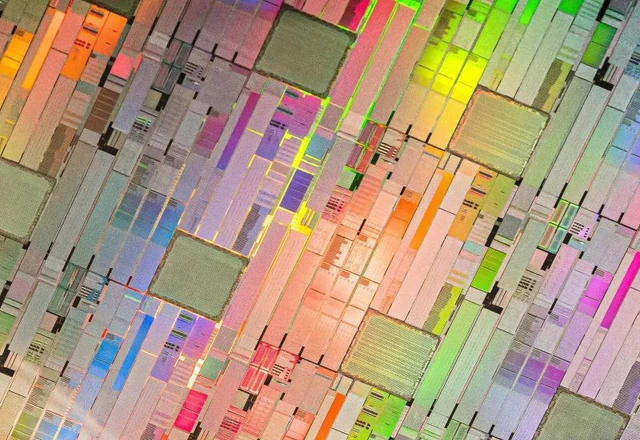 The Triumph of 3nm Chip Manufacturing