The global telecommunications industry is concluding one of the most sweeping cycles of technological displacement in its history. Fixed-line telephony, which served as the bedrock of social connectivity for decades, is finally yielding to mobile and cloud-native solutions. Finland—the very cradle of cellular connectivity—is effectively becoming the first nation to fully close this chapter of its digital evolution. This final severance of physical ties marks a definitive transition toward the absolute dominance of wireless technology.
The symbolic conclusion of this era was marked by an almost ceremonial gesture: the final call over a landline, placed between Elisa CEO Topi Manner and Jarmo Saarikimäki, head of Traficom. This act signaled the definitive end of wired telephony in Finland, transforming what was once critical infrastructure into a historical artifact.
The decommissioning of the legacy network unfolded in stages, mirroring the broader global shift away from physical cabling. Telia took the first decisive step, phasing out landline services as early as 2019. DNA followed, completing its transition by early 2026. Elisa served as the final link in the chain, fully terminating support for both residential and corporate wired connections by June of this year.
The story of the Finnish telephone network dates back to the late 1870s, serving as the primary medium of communication for nearly a century. By the 1960s, Finland stood at the forefront of European subscriber density, with landline popularity peaking in the early 1990s. However, this period also marked the onset of a precipitous decline, triggered by a tectonic shift in technology.
The primary catalyst was the "Nokia phenomenon." As the epicenter of the mobile revolution, Finland demonstrated an unprecedented speed of adaptation to cellular standards. While landlines maintained their relevance in other nations due to consumer inertia, Finns migrated en masse to mobile devices. The statistics are stark: from approximately 2.85 million active lines in the late 1990s, the number plummeted to a mere 47,000 by 2025.
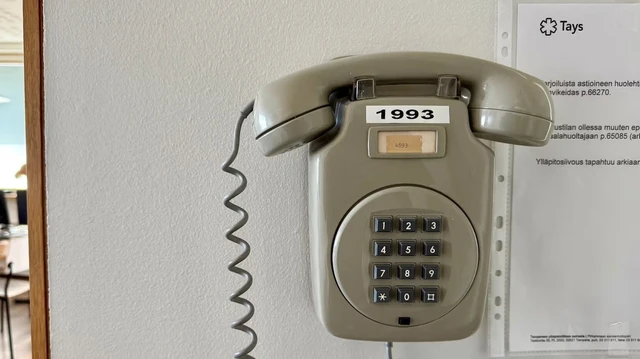
By the time of the final shutdown, landline telephony had ceased to be a communication tool in the traditional sense. In its waning years, it was relegated to niche applications: powering fax machines or providing connectivity for elevator cabins. The technical justification for maintaining a vast network of copper cabling for a few thousand users vanished, and operators stopped onboarding new customers long before the official sunset of the service.
To ensure seamless continuity, a number migration system was implemented. Users were given the option to port their landline identifiers to mobile plans, preventing the loss of critical contacts during the total transition to a digital environment.
For Elisa, the decommissioning of the wired network represents a natural evolutionary milestone. As Europe’s oldest telecommunications operator—with a legacy stretching back to 1882—the company has evolved from copper wires to providing high-speed broadband and sophisticated IT services across Finland and Estonia. This transition illustrates a global paradigm: communication infrastructure is no longer tethered to a physical location, evolving instead into a fluid, digital service.
 The Evolution of the Sony Xperia 10 VIII