The gaming industry is witnessing a fundamental paradigm shift in content consumption, as traditional physical media finally yield to the dominance of digital distribution. Sony’s decision to phase out physical formats entirely by 2028 has ignited a backlash among the community's traditionalists—those who cling to the principle of tangible product ownership. Yet, beneath these visceral reactions lies a cold economic reality and a precipitous decline in demand. Market data reveals that physical media has evolved from an industry standard into a niche commodity reserved for collectors.
The pivot toward an exclusively digital distribution model is far from a corporate whim; it is the logical culmination of gaming infrastructure's evolution. In recent years, a profound disconnect has emerged between the emotional response of gamers and their actual consumer behavior. While thousands of users sign petitions to protect physical media, sales statistics reveal that mass-market interest in physical copies has all but vanished.
Data from the analytical firm Circana underscores the critical scale of this shift: in the first half of the current year, only seven PlayStation titles managed to cross the 100,000-unit threshold for physical sales in the US. A short-term snapshot is even more telling—during the week ending July 11, only two games recorded sales exceeding 10,000 copies. This confirms the thesis that the vast majority of console owners now prioritize the instant access and convenience of digital storefronts.
The scale of community resistance is often amplified by sensationalist social media headlines. For instance, a petition on Change.org garnered an impressive 300,000 signatures. However, within the context of the PlayStation Plus ecosystem—which boasts approximately 50 million active subscribers—this protest appears more as a statistical anomaly than actual market pressure.
Sony’s internal reporting for fiscal year 2025 further validates this trend: digital sales accounted for 78% of total volume, while physical media dwindled to just 22%. Although this still represents roughly 70 million discs in absolute terms, such a share is insufficient to justify the maintenance of complex supply chains, plastic production costs, and retail shelf-space rentals.
Even today's biggest blockbusters are unable to rescue the format. The list of top sellers (those exceeding 100,000 copies) includes titles such as Resident Evil Requiem, Crimson Desert, MLB The Show 26, 007 First Light, Lego Batman, WWE 2K26, and Call of Duty: Black Ops 7. Yet even these figures demonstrate that discs remain viable only for AAA hits or specialized sports simulators, while the mid-market and indie segments have migrated entirely to the cloud.
The industry has reached a point of no return. Production capacities at the last remaining disc manufacturing plants have already begun to wind down, making a return to the previous model technically impossible. Even European Union regulators, traditionally the guardians of consumer ownership rights, have effectively conceded their impotence in the face of this market transformation. The industry is moving decisively toward a "Games-as-a-Service" model, where the physical object ceases to hold value, superseded by the legal right of access.

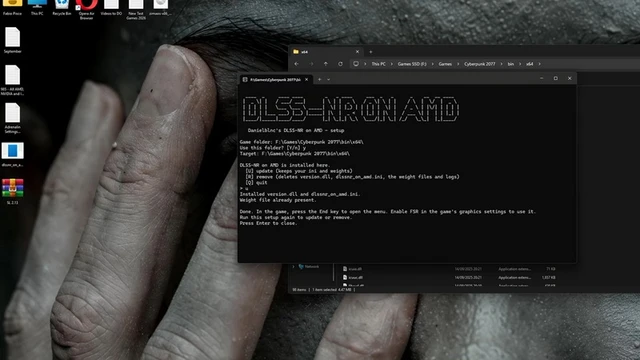 Porting DLSS 5 to the Radeon RX 9000