The global semiconductor market is undergoing a tectonic shift, as manufacturers pivot their priorities toward high-margin enterprise solutions. Driven by the relentless pursuit of AI infrastructure, industry titans are systematically neglecting their commitments to the everyday consumer. The deteriorating state of storage drive warranty services has become a bellwether for a profound crisis of trust between vendors and their customer base. The fundamental right to a functioning device is now devolving into a matter of protracted legal battles.
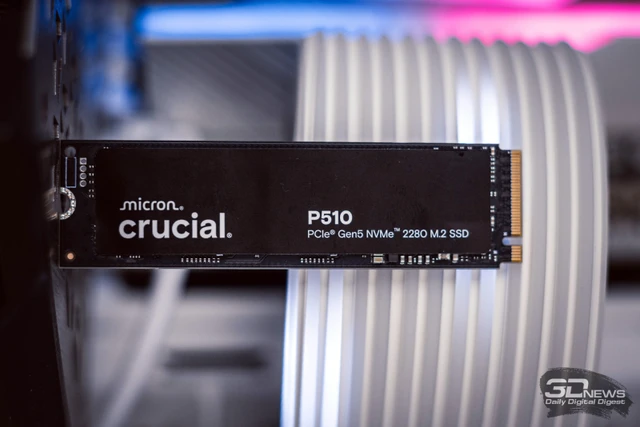
The memory and storage industry is currently navigating a stark paradox: while the AI boom and data center expansion drive record profits, consumer support has become an inconvenient overhead. This shift is most evident in Micron’s approach to its consumer brand, Crucial. Users facing SSD failures are increasingly met with a refusal to replace devices, cited as a consequence of the company winding down its consumer operations.
Rather than providing a physical replacement, the company offers a refund based on the original purchase price. In today’s market—where high-quality components are surging in price due to scarcity and a strategic pivot toward HBM (High Bandwidth Memory) for AI accelerators—such compensation is merely nominal. Often, the refund does not even cover half the cost of a modern equivalent, effectively leaving the consumer to absorb the financial loss.
This strategy is far from an isolated incident. Micron has already signaled its intent to phase out the Crucial line by the end of 2025 to pivot entirely toward the enterprise sector. Despite public assurances that warranty obligations will be met, the practical reality is a drive to minimize these costs to the absolute limit. Similar trends are emerging among other industry titans, including SK hynix, which has also adopted a policy of diminished cash payouts over hardware replacement.
From a strictly legal standpoint, these corporate maneuvers remain within the bounds of internal policy. However, the economic context fundamentally alters the nature of the problem. When the cost of replacing hardware increases exponentially relative to the original purchase price, a simple refund ceases to be an equitable restoration of consumer rights.
Challenging such behemoths is an uphill battle, yet precedents are being set. A landmark case involved "Right to Repair" activist Louis Rossmann, who successfully sued Samsung for the current market value of a failed 4TB 990 Pro SSD. The court effectively recognized that compensation must reflect the actual cost of replacing the device, rather than a receipt from years prior. This case has created a critical legal lever that may force manufacturers to rethink their approach to warranty services.
In the long term, this tension will only intensify. As hardware ages and the shortage of consumer-grade components persists, the conflict between the right to a functional device and the corporate drive for profit optimization will become a central pillar of the discourse on consumer protection in the high-tech sector.
 The Price of Acceleration: CXMT’s Rapid Push into Memory