The vision of democratized space travel is once again confronting the uncompromising realities of engineering precision. Virgin Galactic’s pivot toward a scalable commercial model has hit a temporary snag, hampered by the complexities involved in assembling its next-generation fleet. The rescheduling of the Delta class rollout to 2027 underscores the precarious tension between corporate ambition and the non-negotiable mandates of aerospace safety. Ultimately, this delay serves as a sobering benchmark for the maturity of the private suborbital flight industry.
The commercial space industry has once again been confronted with the stark reality that even minute tolerance discrepancies can trigger months of delays. Virgin Galactic has been forced to recalibrate its timeline for returning to regular suborbital operations: the maiden flight of the new Delta-class spacecraft is now slated for February 2027. While the company had previously aimed for full operational status by late 2026, the final assembly process has proven more arduous than anticipated.
The postponement stems not from critical systemic failures, but rather from the cumulative effect of hundreds of minor integration tasks. This involves the precision installation of cabling, ducting, and interconnects, where every deviation necessitates a rigorous quality re-verification. The sheer scale of the system's complexity is illustrated by the new spacecraft's electrical wiring, which spans 19 kilometers. Given the extreme vibrations and thermal cycling encountered during ascent, such density of communications requires flawless execution—a demand that has necessitated additional time.
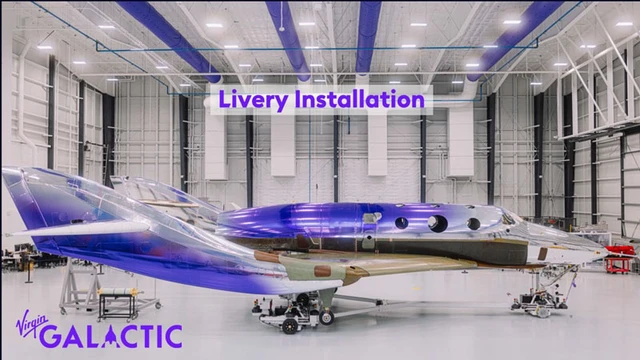
Currently, the first Delta-class vessel is in the final stages of outfitting. Once installation is complete, the company will move into a cycle of comprehensive ground testing. The spacecraft is scheduled for transport to New Mexico in October 2026 to commence flight trials. Virgin Galactic’s technological framework relies on its proven air-launch architecture: a carrier aircraft lifts the spaceplane through the dense layers of the atmosphere, followed by separation and the ignition of its hybrid rocket engine. The mission culminates in a suborbital leap and a gliding return to the airfield.
The Delta series is designed as the definitive technological successor to VSS Unity, whose commercial cycle concluded in 2024. The new vessel represents a significant leap in operational efficiency: passenger capacity has increased from four to six, and the projected service life of a single ship is at least 500 flights. The company's strategy involves aggressive scaling; a second Delta craft is expected to enter service by March 2027, enabling flight frequencies to reach ten missions per month by the end of the second quarter of that year. Meanwhile, the production cost for each subsequent vehicle is estimated at approximately $60 million.
Despite these scheduling headwinds, market demand for suborbital experiences remains exceptionally high. The latest batch of tickets, priced at $750,000 per seat, sold out ahead of schedule, boosting expected revenue by over $50 million. This financial resilience, coupled with a lack of active competition from Blue Origin—whose New Shepard flights are temporarily paused—positions Virgin Galactic to consider price increases in the near future.
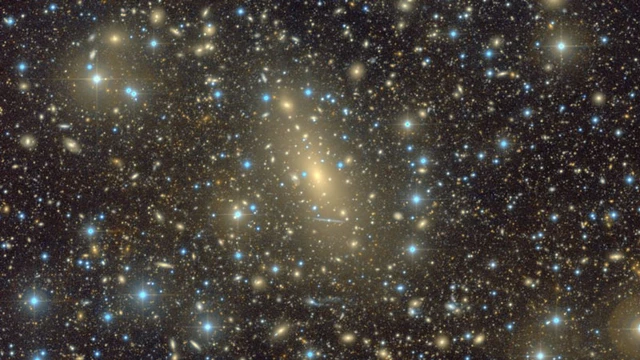 The Phenomenon of the Supermassive Galaxy IC 1101