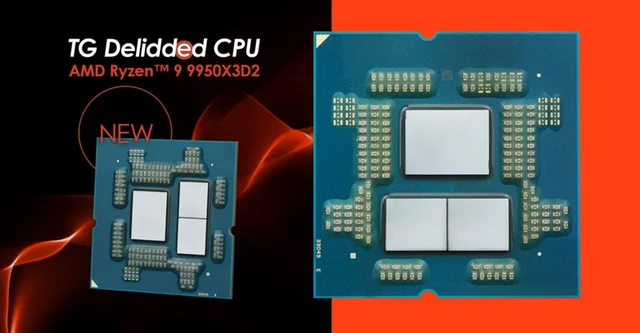
The pursuit of peak performance in modern gaming and high-performance computing inevitably collides with a fundamental physical constraint: thermal dissipation. While flagship processors like the Ryzen 9 9950X3D2 leverage cutting-edge Zen 5 architecture and 3D V-Cache technology, the factory-installed integrated heat spreader (IHS) frequently emerges as the primary bottleneck. To bypass this limitation, enthusiasts turn to "delidding"—a high-stakes procedure designed to gain direct access to the silicon die. Thermal Grizzly has transformed this precarious operation into a premium service, providing professionally modified chips backed by their own comprehensive warranty.
In the realm of extreme overclocking and high-performance computing, heat is the ultimate adversary. The modern AMD Ryzen 9 9950X3D2 represents the pinnacle of current engineering: 16 cores based on the Zen 5 microarchitecture and a massive 3D V-Cache capacity distributed across both CCDs. With a total cache of 208 MB and the ability to boost automatically to 5.6 GHz, this chip is incredibly powerful, yet equally demanding in terms of cooling, given its nominal TDP of 200W.
The primary bottleneck here is the Integrated Heat Spreader (IHS). Despite the quality of factory assembly, the thermal interface material between the die and the spreader creates a degree of thermal resistance. "Delidding"—the removal of this spreader—allows the cooling system to be mounted directly onto the silicon, radically reducing operating temperatures and opening new horizons for overclocking. However, for the average user, this procedure is fraught with risk: a single misplaced movement can physically destroy the processor, and the act of intervention instantly voids the manufacturer's warranty.
Thermal Grizzly has sought to transition this process from a "hazardous hobby" into a professional-grade service. The company has begun offering modified Ryzen 9 9950X3D2 units, where the risk is managed by experts. Such a solution costs approximately $1,400, significantly exceeding the chip's standard price of $899. This price delta is driven not only by the labor involved but also by the provision of a proprietary warranty that replaces the lost factory coverage.
Each unit undergoes a rigorous verification cycle. The buyer receives more than just a "bare" die; they receive a comprehensive technical dossier. The package includes a flash drive containing stress-test results, temperature graphs, and microscopic imagery of the dies. This approach transforms the purchase of a processor into the acquisition of a high-precision instrument, where every piece of silicon has a verified potential.
The operational nuances of a delidded processor demand extreme caution. While the original heat spreader is returned to the owner, Thermal Grizzly categorically warns against reinstalling it. Once removed, a microscopic height gap emerges between the chiplets and the spreader—a gap that standard thermal interface materials cannot compensate for. Attempting to reseat the IHS can lead to uneven pressure, die damage, and a subsequent loss of warranty.
Particular attention must be paid to the cooling ecosystem. Standard AMD Direct Die Frames prove incompatible with this specific modification. The recommended path is the use of specialized direct-die contact solutions or the installation of custom replacement lids in conjunction with Conductonaut liquid metal. Crucially, the insulation of exposed surface-mount (SMD) components on the PCB remains critical, as the electrical conductivity of liquid metal can lead to catastrophic short circuits.
Ultimately, Thermal Grizzly’s offering is tailored for a niche segment of enthusiasts for whom the battle for every degree and every megahertz outweighs economic pragmatism. It is the transformation of a mass-market product into an exclusive engineering specimen, where the cost of error is minimized through professional execution.
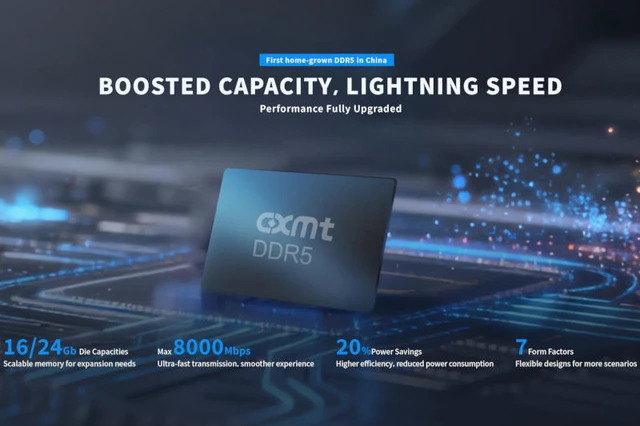 The Price of Acceleration: CXMT’s Rapid Push into Memory