Hardware-level data security has long since evolved beyond the exclusive domain of the enterprise sector. Transparent Secure Memory Encryption (TSME) was poised to serve as a robust shield for every user, safeguarding sensitive information against physical extraction. However, recent developments surrounding AMD’s consumer processors point toward a deliberate curtailment of this functionality. This discrepancy exposes a fundamental tension between the raw capabilities of the silicon and the rigid constraints of strategic product segmentation.
In the contemporary cybersecurity landscape, the protection of data residing in volatile memory has become a critical priority. One of the most potent defenses in this domain is Transparent Secure Memory Encryption (TSME). Unlike standard encryption methods that require active orchestration by the operating system, TSME operates at the firmware level. By making the encryption and decryption process "transparent" to the OS, it effectively neutralizes the risk of sensitive data theft, even in scenarios involving direct physical access to the memory modules.
For years, this feature was widely regarded as available across a broad spectrum of AMD products. Although TSME was officially positioned as a hallmark of the professional Pro lineup, it functioned consistently within consumer-grade Ryzen silicon. Recently, however, users have begun to notice a concerning trend: a feature that had been accessible for years has suddenly vanished from Windows systems and now requires exhaustive effort to activate within Linux environments.
The investigation into this anomaly began with an analysis of the new Zen 5-based Ryzen 7 9700X. When auditing the system using the Linux Host Security ID (HSI) utility, a paradox emerged: the tool reported that TSME was unsupported, yet simultaneously confirmed that the memory was indeed encrypted. This occurred despite the function being explicitly enabled in the BIOS settings. Further analysis revealed that the issue was systemic—not a result of hardware defects, but rather a software-imposed limitation.
The catalyst for this shift was an update to AGESA (AMD Generic Encapsulated Software Architecture), the foundational microcode that serves as the bridge between the processor and the motherboard's BIOS. It was discovered that in firmware based on AGESA version 1.2.7.0, TSME support for consumer Ryzen models was effectively blocked. On older firmware versions from MSI and Gigabyte, the feature continued to operate flawlessly, pointing unequivocally to the artificial nature of these restrictions.
To definitively validate this hypothesis, comparative tests were conducted. A consumer Ryzen 7 9800X3D and a professional Ryzen 9 Pro 9945 were sequentially installed on the same X870E chipset motherboard. An analysis of the ABL (AMD Boot Loader) memory dumps revealed a specific indicator: DfIsTsmeEnabled. For the professional chip, this parameter was set to "active," whereas for the consumer model, it was forcibly set to FALSE. Notably, no amount of BIOS manipulation could alter this status; the restriction was embedded deep within the microcode policy.
AMD's response to these findings has been pointedly evasive. Company representatives have limited their comments to the assertion that TSME is an exclusive feature of the Pro series. However, this stance stands in direct contradiction to previous statements from the company's own engineers, who had historically confirmed support for the technology in standard Ryzen CPUs and even recommended its use.
The disconnect between technical reality and official corporate narrative sets a dangerous precedent. There is a fundamental distinction between SME (Secure Memory Encryption), which is managed by the OS, and TSME, which operates autonomously. The latter provides a significantly higher echelon of security, as it remains independent of vulnerabilities within the operating system's kernel.
The TSME situation is a textbook example of "functional gating," where hardware capabilities are intentionally disabled via software to create an artificial value proposition for more expensive corporate product lines. The fact that the company refuses to explicitly confirm or deny the intentional disabling of the feature only deepens the distrust within the enthusiast community. In an era where hardware-level security is becoming a baseline requirement, such opaque manipulations of functionality appear not merely as a marketing tactic, but as a regression in transparency and end-user protection.
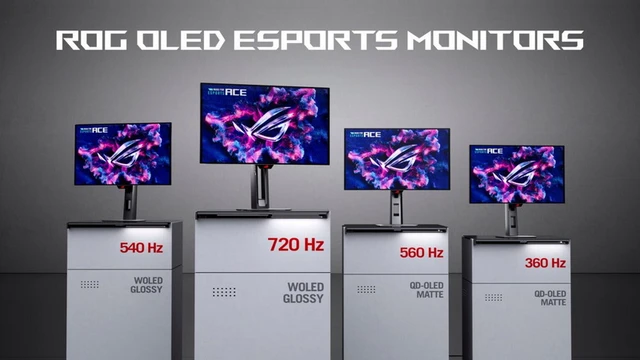 The Speed Limits of Modern Gaming Displays