The global technology market remains poised in a delicate balance, oscillating between the euphoria surrounding artificial intelligence's potential and the pragmatic skepticism of the investment community. Intermittent doubts regarding the sustainability of hardware demand are routinely eclipsed by surges of optimism whenever concrete financial metrics come to light. Recent reports from industry titans have reaffirmed that the AI infrastructure cycle is in full swing, sparking a massive revaluation of assets among the leading semiconductor manufacturers.
The semiconductor market has recently been gripped by volatility, punctuated by a sharp 8% single-day plunge in the PHLX index. This sparked a wave of investor anxiety, with many questioning whether the AI hype cycle had reached its zenith and if a demand plateau for critical components was imminent. Yet, this skepticism was rapidly dismantled following the release of quarterly earnings from Qualcomm and Micron, which ignited a massive market rally.
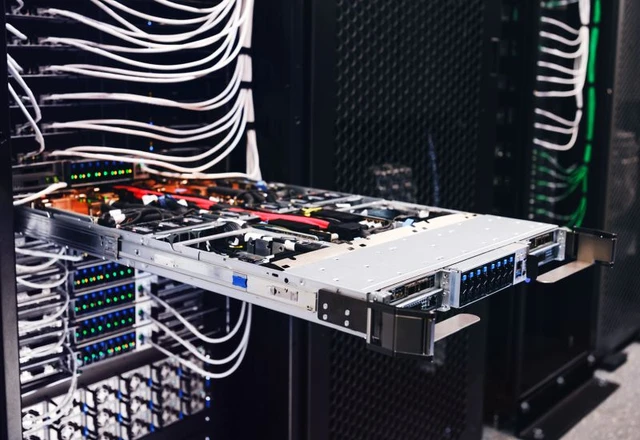
Qualcomm has charted a decisive new course, pivoting aggressively toward the server solutions market. The company is eyeing exponential revenue growth by deploying specialized processors and accelerators designed to serve as the bedrock of cloud-based data processing. This strategic pivot signals Qualcomm's ambition to transcend its mobile origins and embed itself into the very core of AI compute architecture.
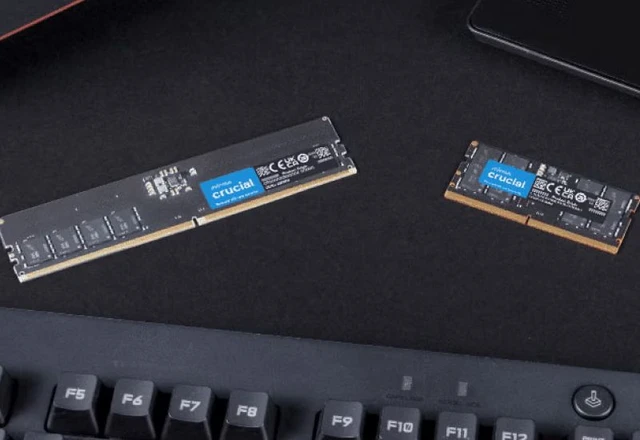
Simultaneously, Micron Technology is posting phenomenal financial results, emerging as a primary beneficiary of the "AI memory" boom. In the era of Large Language Models (LLMs), memory bandwidth—specifically High Bandwidth Memory (HBM)—has become a critical bottleneck; Micron has successfully seized a dominant position here, achieving the highest profit margins among the American tech titans. This meteoric rise is mirrored in its stock performance, which has surged over 260% year-to-date, even excluding the most recent spike.
The domino effect triggered by these two giants rippled instantaneously across the entire semiconductor ecosystem. The aggregate market capitalization of U.S. suppliers swelled by a staggering $400 billion, with the rally extending beyond direct competitors to encompass the entire value chain.
Storage specialists Western Digital, SanDisk, and Seagate Technology—direct competitors to Micron—saw their shares climb by more than 8%. The momentum also reached the UK-based Arm, whose architectural licenses underpin Qualcomm’s processors, with its stock gaining 6%. Following suit were Marvell and Broadcom, whose networking solutions are indispensable for the high-speed interconnects between GPUs in massive AI clusters.
Rounding out this technological cycle are the providers of lithography and fabrication equipment. ASML and Applied Materials—the gatekeepers of modern nanometer-scale chip production—also saw their shares rise by over 4%.
This surge underscores a critical market realization: the current demand for AI infrastructure is not a transient hype cycle, but a fundamental transformation of global computing capacity. When industry bellwethers validate this with tangible revenue and profit growth, confidence restores itself across the sector, transforming temporary volatility into a springboard for the next wave of expansion.
 The Evolution of the Apple Home Ecosystem