The quest for fully reusable space systems has evolved into a war of attrition and a monumental global engineering challenge. SpaceX’s Starship has emerged as the epicenter of this struggle, with every test flight teetering on the razor's edge between triumph and catastrophe. The successful splashdown and subsequent recovery of Ship 40 in the Indian Ocean signal a pivotal shift: moving away from an era of haphazard losses toward a phase of rigorous empirical analysis. Real-world data on material degradation will now serve as the bedrock for the final push toward the Moon.
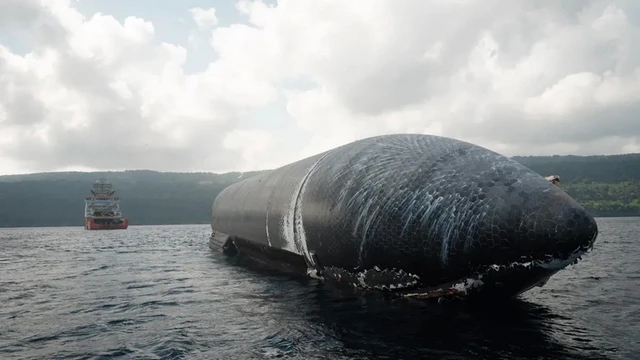
The journey toward engineering the most powerful rocket in human history has been anything but linear. Within SpaceX’s iterative development cycle—where every failure is treated as a critical data point—the mission of the thirteenth test flight yielded a result that initially seemed improbable. Ship 40, which splashed down in the Indian Ocean on July 24, endured 24 days adrift in the open sea. Despite pessimistic forecasts regarding potential flooding, the craft was successfully towed to Christmas Island.
The recovery of Ship 40 proved to be a grueling ordeal for the SpaceX Recovery team. The operation unfolded amidst turbulent seas, where storm activity repeatedly jeopardized the mission's success. It took nearly a month of battling the elements before the 52-meter behemoth finally reached the calm waters off the coast of the Australian external territory. Christmas Island, renowned for its unique ecosystem and the mass migration of millions of red crabs, briefly served as a makeshift technical outpost for analyzing the ship's condition.
From a technical standpoint, the survival of Ship 40 is of paramount importance. Previous attempts by the Starship V3 lineage to make their mark ended either in explosions upon landing or uncontrolled descents, as seen with Ship 39 in the Gulf of Mexico. Ship 40 is the first of its family to return from space intact. For engineers, this provides invaluable "tangible forensic evidence" of the system's performance. Specialists can now conduct a granular analysis of the Thermal Protection System's (TPS) effectiveness, the state of the hydraulic systems, and the overall structural integrity of the hull following extreme thermal and mechanical loads.
This success directly impacts NASA's strategic objectives under the Artemis program. Starship has been designated as the primary transport vehicle for landing astronauts on the lunar surface for the Artemis 4 mission, slated for 2028. Furthermore, the Artemis 3 mission, planned for 2027, intends to test complex rendezvous and docking maneuvers between Starship V3 and the Orion spacecraft in low Earth orbit. Without empirical confirmation of the return stage's reliability, such objectives would remain relegated to the realm of theoretical modeling.
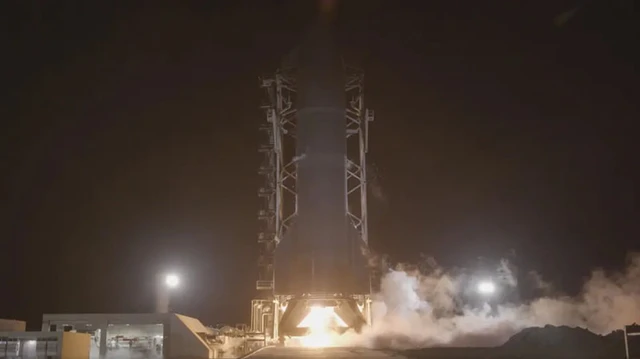
While Ship 40 awaits its final return to the Starbase launch site, SpaceX has already shifted its focus to the next milestone. The preparation of Ship 41 and the Super Heavy booster for the 14th launch marks a pivotal transition from splashdowns to precision capture. The plan is for the ship to be caught mid-air by the massive mechanical arms of the launch tower—aptly nicknamed "Mechazilla."
Should this maneuver succeed, SpaceX will effectively sever its reliance on unpredictable oceanic conditions and costly towing operations. The transition to full reusability will minimize the turnaround time between launches, transforming space travel from a series of rare events into a routine logistical operation.
 The Phenomenon of the Supermassive Galaxy IC 1101