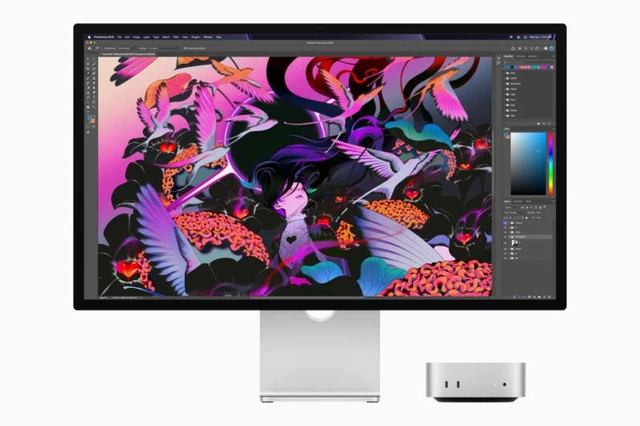
Apple continues to redefine the compact computing landscape with the release of its updated Mac mini. The migration to M6 and M5 Pro silicon injects unprecedented processing power into a miniature form factor, pushing the boundaries of what small-form-factor PCs can achieve. Yet, this technological leap comes with a significant price hike, challenging the historical affordability that once defined the product line. The industry is now grappling with whether the promise of AI capabilities provides sufficient justification for this new pricing strategy.
The debut of the new Mac mini, powered by M6 and M5 Pro chips, marks another milestone in the evolution of Apple's compact systems. From a technical standpoint, the device is nearly flawless: performance density per cubic inch has reached new heights, transforming a tiny chassis into a full-fledged workstation. Yet, beneath this hardware perfection lies a significant economic dilemma.
Critical analysis from industry staples like The Verge and Gizmodo points to a stark disconnect in price positioning. While the previous generation offered an attractive entry point around $600, the new model starts at $900. This $300 leap creates a palpable psychological and financial barrier, offsetting some of the gains provided by the increase in raw power.
Apple is aggressively positioning the new Mac mini as an AI-centric tool. The integration of advanced neural engines in the M6 chips certainly puts the device leagues ahead of its M4 predecessor, but whether AI constitutes a compelling reason to upgrade remains an open question. For the average user, generative AI capabilities and ML acceleration have yet to become daily necessities that justify such a steep price hike.
For the professional segment, however, the calculus is different. The M5 Pro variant emerges as a strategically vital tool for software developers and data scientists, where high multi-threaded performance translates directly into time saved. In this context, the pricing feels competitive, given the sheer volume of computing power packed into such a minimal footprint.
Visual content creators also find the Mac mini to be a viable solution. For photographers and retouchers, the device provides the necessary headroom for processing heavy assets, albeit with certain trade-offs. Notable drawbacks include the lack of Thunderbolt 5 support—which could become a bottleneck when interfacing with ultra-fast external storage arrays—and the traditionally mediocre integrated speakers. However, in a professional setup utilizing external monitors and studio monitors, these nuances are largely irrelevant.
The final piece of the puzzle is the product's pricing hierarchy. With the base M6 Mac mini starting at $899 and the M5 Pro beginning at $1,699, top-tier configurations can soar to a record $6,799. This spread transforms the Mac mini from an accessible "gateway" into the Apple ecosystem into a high-margin product tailored for a narrow circle of specialists.
Ultimately, the industry is facing a paradox: Apple has engineered one of the finest mini-PCs in history, but in doing so, it has stripped the device of its greatest historical asset—exceptional affordability.
 AMD’s Trillion-Dollar Leap in the Age of AI