The video game industry is undergoing a tectonic shift as sovereign wealth funds begin to redraw the ownership map of its most prized assets. The acquisition of Electronic Arts by Saudi Arabia’s Public Investment Fund (PIF) stands as a watershed moment in the global redistribution of digital capital. This transaction transcends simple corporate expansion; it is a manifestation of a broader strategic pivot to decouple an entire national economy from its reliance on oil. With European Union regulatory hurdles now cleared, the way is finally open for one of the most significant mergers in gaming history.
The European Commission has brought a definitive conclusion to the protracted approval process for one of the most ambitious deals in the modern entertainment industry. Saudi Arabia's Public Investment Fund (PIF) has received official clearance to acquire Electronic Arts—an American titan whose footprint on the European market is so significant that the transaction automatically triggered rigorous scrutiny from Brussels. Valued at $55 billion, the deal underscores the colossal scale of financial resources being deployed in this operation.
The primary point of contention was not so much antitrust law as the EU's Foreign Subsidies Regulation (FSR). This mechanism was specifically engineered to prevent market distortions; Brussels aims to eliminate scenarios where companies backed by non-EU state funds gain an unfair competitive edge when acquiring assets within the 27-member bloc. The investigation was exhaustive, given that PIF functions essentially as a state financial instrument, and any intervention in the EU market requires verification that subsidies will not be leveraged to stifle local competition.
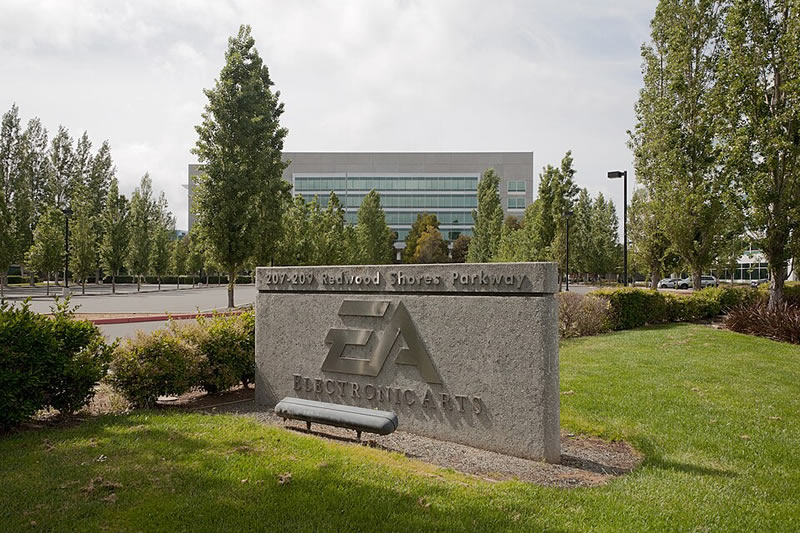
For Electronic Arts, this phase served as a critical litmus test. In its latest official filings, the company confirmed that all regulatory obstacles were cleared by the end of July. The final closing of the deal is expected on August 4th, effectively transferring control of one of the world's largest content creators to the Saudi fund.
This acquisition is far from a random financial maneuver; it is deeply integrated into Saudi Arabia's global strategy for economic diversification. Under the "Vision 2030" program, the Kingdom seeks to aggressively reduce its reliance on oil exports by investing in high-growth sectors: tourism, sports, and, crucially, the digital economy. In this context, video games are viewed not merely as entertainment, but as a full-fledged infrastructure industry of the future.
Consequently, the absorption of EA becomes part of a broader trend toward gaming market consolidation, where traditional Western publishers are gradually falling under the control of global investment structures. This creates a new reality in gaming, where strategic decisions are driven by long-term state interests and geopolitical ambitions, transforming the video game industry into one of the primary instruments of "soft power" on the world stage.

 Philips Sets New Standards for QD-OLED