The global AI boom has ignited an insatiable demand for semiconductor memory, driving component costs to stratospheric levels. Yet, this explosive growth has proven to be a double-edged sword, introducing systemic risks for the industry's dominant players. Acute supply shortages are now forcing tech giants to recalibrate their geopolitical footprints and pricing strategies. The market has come to realize that excessive windfall profits inevitably trigger a severe correction.
The onset of July brought a stark correction in sentiment surrounding memory chip manufacturers. Shares of Micron and Sandisk experienced a precipitous decline; the latter, having served as one of the market's primary bellwethers with a staggering 3,700% annual growth, proved particularly vulnerable. This volatility was not triggered by an external shock but was rather the inevitable culmination of the "boom" itself. Record profits created a paradox where commercial success began to undermine operational sustainability.
The root cause of the crisis lies in a fundamental disconnect between the insatiable demand of the AI industry and the physical constraints of manufacturing. Modern data centers require colossal volumes of High Bandwidth Memory (HBM), yet scaling production capacity is an inertial and capital-intensive process. Consequently, prices for server and PC DRAM, as well as NAND flash memory, have surged by approximately 660% over the past year.
This pricing asymmetry fosters a precarious environment. When the gap between supply and demand reaches a critical threshold, clients shift from a state of anticipation to one of desperation. At this juncture, the manufacturers' economic windfall transforms into a strategic risk: buyers begin leveraging regulators to ease trade restrictions in pursuit of more affordable alternatives.
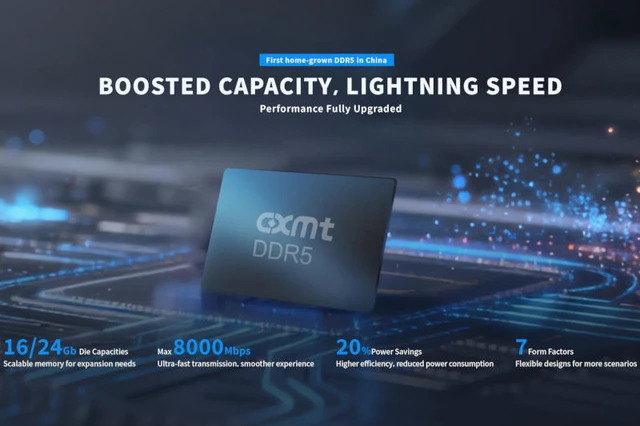
This friction is most evident in Apple’s recent maneuvers. According to reports from Bloomberg and the Financial Times, the company is engaged in procurement negotiations with China's CXMT and YMTC—entities currently on Pentagon blacklists due to their ties to the Chinese state apparatus. Business pragmatism is overriding political mandates; these chips are essential for devices sold within the Chinese domestic market. To legitimize these transactions, Apple’s leadership has been forced into direct dialogue with the U.S. administration, attempting to navigate the jagged edges of geopolitical confrontation.
The ripple effects of this shortage have reached the end consumer. In late June, Apple was compelled to revise the pricing for its entire Mac, iPad, and Vision Pro lineups, citing the rapid escalation of component costs. A similar trend emerged at Microsoft, which raised Xbox console prices for the third time this year. Memory has ceased to be a mere line item in a spec sheet; it has become the primary driver of the final cost of high-tech products.
Simultaneously, the market has begun pricing in signals of expanded capacity. Korean giants Samsung and SK Hynix have announced an accelerated ramp-up in production, which will inevitably lead to increased supply and downward price pressure. While the July sell-off was tied to a broader correction across the AI sector, it clearly underscored a new market reality: the higher prices climb for a scarce resource, the more aggressively the mechanisms that end the party are activated.
 The Price of Acceleration: CXMT’s Rapid Push into Memory