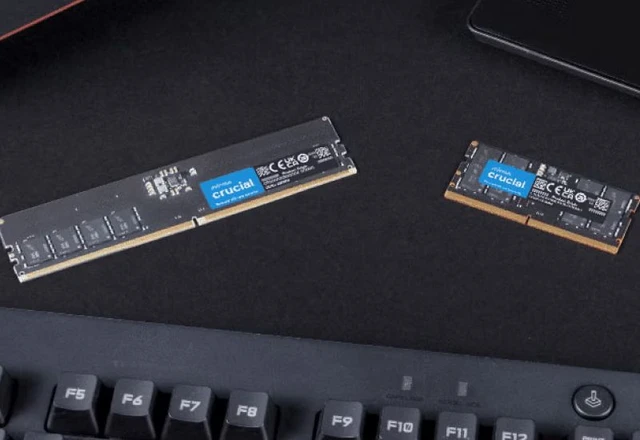
The global AI arms race is fundamentally reshaping capital flows across the semiconductor landscape. While market attention remains laser-focused on GPU manufacturers, the high-performance memory sector is undergoing an unprecedented renaissance. Micron Technology’s latest financial results signal a profound evolution, transforming the company from a commoditized component supplier into one of the most high-leverage players in the tech ecosystem. This surge in margins heralds a new era—one where the infrastructure supporting AI is becoming even more lucrative than the raw compute power itself.
The current surge in generative AI has triggered an acute shortage of specialized memory, forcing a drastic overhaul of industry pricing strategies. Micron Technology has found itself at the epicenter of this shift, posting a staggering expansion of its profit margins, which skyrocketed from 39% to 84.9% year-over-year. This performance places the company at the pinnacle of financial efficiency among U.S. tech giants, eclipsing even Nvidia at 75% and Meta Platforms at 82%.
The company's financial trajectory over the last quarter can be described as a meteoric rise. Revenue more than quadrupled, reaching $41.46 billion, with sequential growth hitting 74%. The profit metrics are even more striking: Non-GAAP operating profit surged 13.5-fold to $33.7 billion, while net income grew 13.2-fold, totaling $28.9 billion.
Underpinning this financial triumph is a meticulously engineered strategy for demand and supply management. Micron has pivoted toward a long-term planning model, securing 16 strategic agreements with key clients. These contracts, spanning three to five years, are projected to account for more than half of the company's total revenue in the future. Of particular significance are the prepayments associated with these obligations, estimated at approximately $22 billion, effectively guaranteeing financial stability and revenue predictability for years to come.
The company's capital allocation strategy further reflects its ambitions for market dominance. Capital expenditures in the previous quarter totaled $7.1 billion, while adjusted free cash flow reached $18.3 billion. By the end of the reporting period, the company had accumulated a cash reserve and highly liquid assets amounting to $30.2 billion. In the current quarter, investments are expected to scale further to $10 billion against a projected revenue of $50 billion—figures that substantially outperform conservative analyst estimates.
The revenue breakdown clearly identifies the primary growth engines. The server segment emerged as the undisputed leader, with revenue increasing sevenfold to $11.5 billion, driven largely by server-grade SSD shipments which contributed over $5 billion. Cloud infrastructure also experienced an exponential surge of over 300%, bringing sector revenue to $13.77 billion. The mobile and client segments grew by 250%, while the automotive and embedded sector more than quadrupled its performance, securing $4.63 billion.
Analysts believe that the current imbalance between supply and demand will continue to favor memory manufacturers for the foreseeable future. Component prices are expected to climb through the end of 2027, although the pace of growth may moderate. Full market stabilization is not anticipated until 2029. In the short term, the memory chip deficit will remain the primary bottleneck hindering the expansion of AI infrastructure, positioning Micron as one of the chief beneficiaries of this technological transition.
 The Evolution of the Apple Home Ecosystem