In an era of total technological convergence, every ambitious visionary eventually succumbs to the temptation of crafting their own "window to the world." For Elon Musk—whose pursuits span everything from the colonization of Mars to neural interfaces—launching a smartphone would seem a logical, albeit perilously risky, progression. Yet, recent whispers regarding secret SpaceX prototypes have been met with a sharp, uncompromising denial from the entrepreneur himself. At the heart of this friction lies a fundamental question: does the world truly need another gadget, or is it time to reimagine the very essence of global connectivity?
The Wall Street Journal recently broke a story suggesting that SpaceX may be quietly laying the groundwork for a foray into the consumer electronics market. According to insider sources, prior to a June IPO, Musk may have showcased a prototype to a select group of investors—a device with a form factor and profile even slimmer than that of a modern iPhone. The technical specifications of this hypothetical gadget were formidable: it was reportedly powered by a high-performance Qualcomm Snapdragon processor and driven by a proprietary operating system featuring deep integration with AI capabilities from the xAI startup.
Such a move would represent an attempt to build a fully vertically integrated ecosystem, where hardware, software, and neural intelligence operate in a single synergistic loop. However, Elon Musk was quick to shut down these speculations on his X platform, decisively labeling the reports of smartphone development as completely unfounded.
Nevertheless, rumors of this nature rarely emerge in a vacuum. They are fueled by tangible strategic pivots within SpaceX. The company's COO, Gwynne Shotwell, has previously signaled to investors plans to launch a comprehensive mobile communication service in the United States. The linchpin of this strategy is the Starlink satellite constellation, capable of providing coverage in regions where traditional cellular towers are nonexistent or ineffective.
Analysts view this as a long-term strategic play. Currently, Starlink is SpaceX's only truly profitable division, and its evolution from a mere internet service provider into a full-scale telecommunications operator appears economically sound. Furthermore, industry circles have even discussed potential acquisition scenarios involving T-Mobile, which would grant SpaceX instantaneous access to terrestrial infrastructure and millions of existing subscribers.
Musk's own relationship with smartphones has always been ambivalent. In his public reflections, he has frequently admitted to a visceral aversion to the very idea of creating a phone. In his view, the smartphone often serves as an engine of digital distraction rather than a tool for productivity.
That said, the entrepreneur continues to reserve the right to act as a last resort. He has stated on multiple occasions that if circumstances dictate that launching his own device is the only way to ensure the viability of his ecosystem or to safeguard freedom of speech, he will take that step. For now, however, SpaceX remains focused on the infrastructure layer, preferring to redefine the way data is transmitted on a global scale rather than competing in the oversaturated market of "glass rectangles."
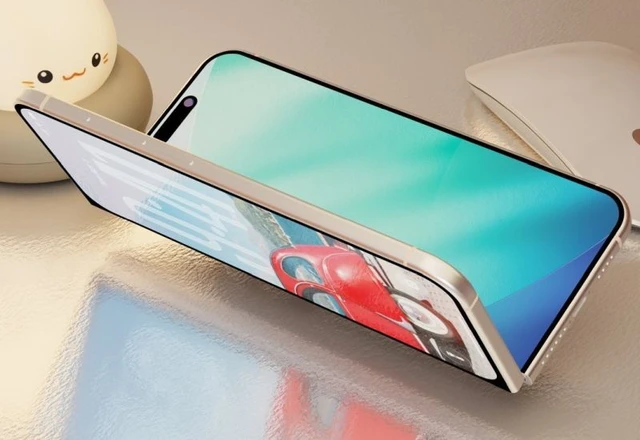 The Phenomenon of the Foldable iPhone Ultra