The era of expendable rocketry is steadily receding, giving way to the paradigm of reusable stages—a shift that is fundamentally redefining the economics of orbital access. Japan, long characterized by its conservative approach to aerospace, is now making a decisive leap toward VTVL (Vertical Takeoff, Vertical Landing) technology. The testing of the RV-X prototype serves as a pivotal validation of Japan's engineering vision; though brief, this flight establishes the essential foundation for a new generation of domestic reusable launch vehicles.
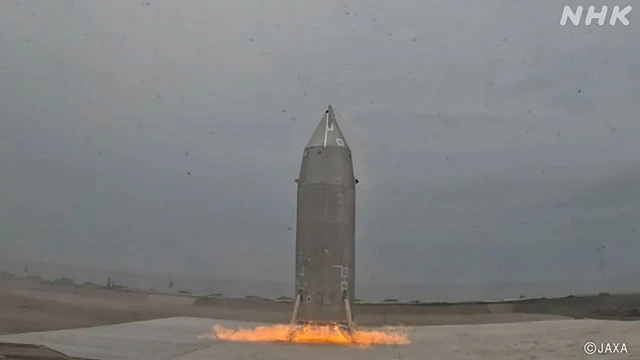
At the Noshiro rocket range in Akita Prefecture, a pivotal moment has unfolded, marking the beginning of a new chapter in Japanese astronautics. The Japan Aerospace Exploration Agency (JAXA) has conducted the maiden flight test of the RV-X (Reusable Vehicle eXperiment). While the flight profile was brief, it was technically rigorous: the vehicle ascended vertically to 11 meters, executed a 16-meter horizontal translation, and touched down precisely on its pad. Forty seconds of system operation served as a critical proof of concept, transforming theoretical calculations into physical reality.
Despite its modest altitude, the RV-X should not be viewed as a fully realized rocket. Rather, it is a sophisticated airborne testbed designed to refine the critical components of a recoverable first stage. Standing 7.3 meters tall with a diameter of 1.8 meters, the vehicle employs a VTVL (Vertical Take-off Vertical Landing) architecture. To dissipate residual energy upon touchdown, four shock-absorbing struts are utilized to compensate for both vertical and lateral velocities—an approach mirroring the operational principles of the Falcon 9 boosters, which have become the gold standard of modern commercial spaceflight.
The RV-X's propulsion system warrants particular scrutiny. It utilizes a cryogenic propellant pairing: liquid hydrogen and liquid oxygen. The choice of hydrogen is driven by the pursuit of maximum specific impulse, a critical factor for the efficiency of reusable systems. However, this configuration significantly complicates operations due to extreme cryogenic temperatures and hydrogen's inherent tendency to leak. A primary engineering challenge here is deep throttling; the engine must operate across a wide power range to balance the mass of a nearly empty tank and ensure a soft landing. The structural integrity of the design is underscored by the fact that the prototype's engine successfully endured 165 static fire tests prior to the main flight.
In the near term, JAXA plans to scale its experiments, increasing the ascent altitude to 100 meters. This will allow the agency to expand the velocity envelope and test more complex landing conditions. These data points will serve as the foundation for CALLISTO, an international project conducted in collaboration with France's CNES and Germany's DLR. Under this partnership, a larger demonstrator—approximately 13 meters in height—is planned. Its objectives will be far more ambitious: mastering engine shutdown and reignition in flight, managing descent aerodynamics, and executing the flip maneuver toward the landing pad. The ultimate goal is the development of a reusable successor to the H3 rocket, which would drastically reduce the cost of delivering payloads into orbit.
Japan's trajectory toward reusability has been uneven. As early as the late 1990s, research was underway in this direction, but at the time, recoverable stages were deemed redundant and economically unjustifiable. A paradigm shift occurred only after the triumph of SpaceX, when the success of the Falcon 9 proved to the world that reusability is not a utopia, but the only viable path toward efficient space exploration. JAXA officially pivoted its strategy in 2014, and after a decade of research, the RV-X "grasshopper" has finally left the ground.
Against the backdrop of Japanese progress, other global initiatives appear to be stagnating. For instance, Europe's Themis project—which significantly exceeds the Japanese prototype in scale—has yet to perform its first flight despite missing multiple deadlines. Although the Prometheus cryogenic engine has undergone separate testing, the full-scale launch of the vehicle in Sweden continues to be postponed. This underscores the sheer complexity of transitioning to reusability: even with a robust technical foundation, actual flight and successful recovery remain among the most daunting engineering challenges in existence, where every centimeter of altitude is hard-won.
 A Pragmatic Approach to Lunar Equipment Design