The contemporary technology landscape is grappling with a stark paradox: while demand for high-tech products continues to surge, manufacturing capacity has failed to keep pace with corporate ambitions. Apple, a primary beneficiary of the digital transformation era, now finds itself at the epicenter of this crisis, warning of intensifying supply shortages across its iPhone, Mac, and iPad lineups. Wall Street’s reaction was swift and severe; a 5.5% dip in share price underscores investor anxiety over systemic disruptions within global supply chains. In this climate, the primary bottleneck is no longer a lack of consumer demand, but rather a critical deficit of essential components and semiconductors.
Apple's current trajectory underscores the inherent fragility of global logistics in the era of post-pandemic recovery. While the company continues to demonstrate steady growth, its own forecasts for the upcoming quarter have proven more conservative than analysts anticipated, with revenue growth slowing to 9–11% against a projected 12%. The root cause lies in "limited flexibility" within supply chains—essentially an inability to rapidly scale production during sudden surges in demand for systems equipped with high-performance processors and expanded memory capacities.
This challenge is compounded by a shortage of cutting-edge fabrication capacity for Apple Silicon. While the transition to proprietary semiconductors granted the company a massive technological edge, it simultaneously created a critical production bottleneck: reliance on a limited number of lithography nodes leaves Apple vulnerable to any volatility in the supply of materials and components.
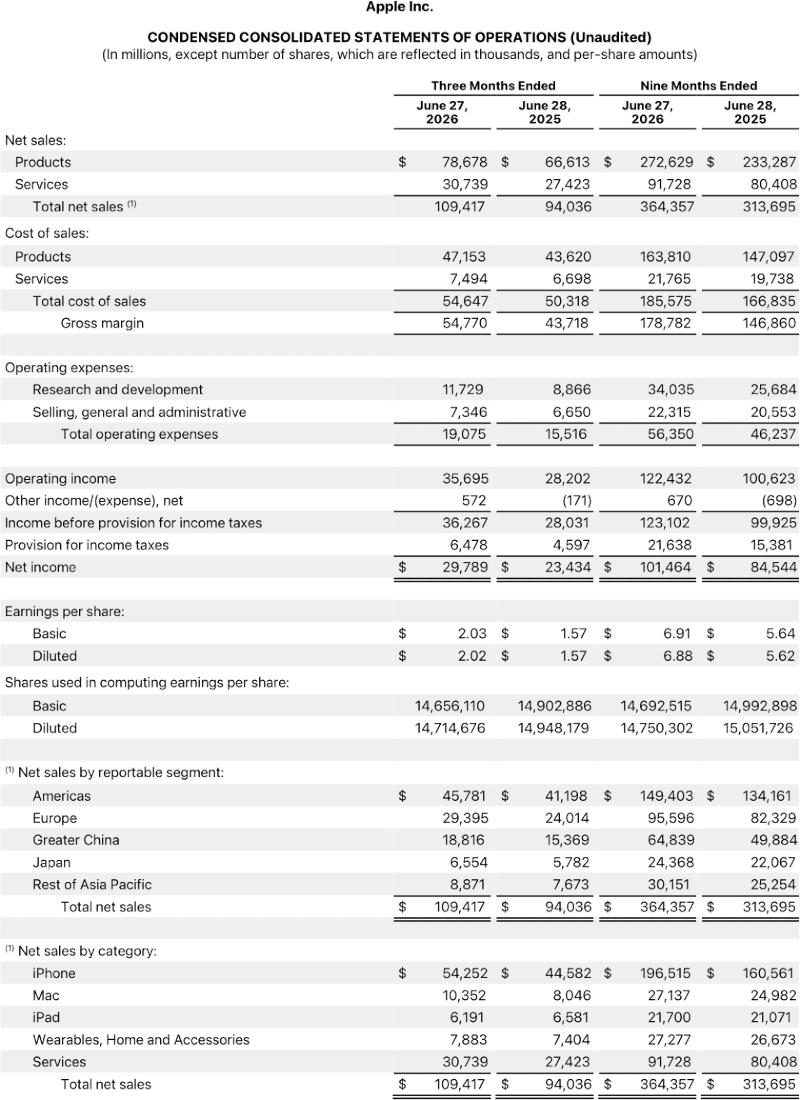
An analysis of recent financial results reveals an impressive, albeit nuanced, landscape. Total revenue reached $109.42 billion, marking a 16.4% increase over the previous year. Earnings per share stood at $2.02, though it is important to note a key detail: part of this result was bolstered by customs duty recoveries from the U.S. government. Excluding this factor, the gross margin sat at 48.1%, aligning closely with market expectations and signaling high operational efficiency even amidst systemic crises.
The standout performer was the Mac segment, where sales surged nearly 29% to reach $10.35 billion. This success was driven by both the budget-friendly MacBook Neo models and the premium Pro series. Notably, price hikes failed to deter consumers, confirming deep-seated loyalty to the Apple Silicon ecosystem. Conversely, the iPad segment saw a decline of 5.9%, a shift attributed to typical upgrade cycles; the previous year was anomalously successful due to the launch of a budget tablet powered by the A16 chip, and current figures are simply returning to a normalized rhythm.
The iPhone remains the company's primary growth engine, delivering record third-quarter revenue of $54.25 billion. Typically, this period is characterized by a seasonal lull preceding the autumn launches; however, this time, price increases acted as an additional catalyst for financial growth. Meanwhile, performance in Greater China fell below expectations, potentially signaling market saturation or shifting consumer preferences within the region.
Parallel to its hardware efforts, Apple continues to aggressively scale its Services segment, which generated $30.74 billion. The strategic pivot is now moving toward the monetization of intelligent features: the integration of new Siri capabilities supported by Google and updates to iCloud Plus are opening new avenues for recurring revenue streams. In doing so, the company is diversifying its risk profile, shifting focus from physical goods—constrained by factory capacities—to digital services, whose scalability remains independent of semiconductor shortages.
 Apple’s Strategic Foray into the Gaming Controller Market