Modern spaceflight is decisively transitioning from an age of sporadic expeditions to an era of industrial-scale throughput. SpaceX continues to redefine the boundaries of orbital logistics, transforming highly complex launches into routine operational procedures. Their latest record for launch cadence underscores an unprecedented level of synchronization between ground operations and technical infrastructure. This milestone reinforces the premise that rocket reusability has become the bedrock of a burgeoning Low Earth Orbit (LEO) economy.
Achieving a minimal window between launches is more than a mere technical milestone; it is a definitive indicator of the maturity of SpaceX's operational infrastructure. On Saturday, August 15, the company set a new standard for operational agility, sending two Falcon 9 rockets into space with an interval of just 38 minutes. For context, the previous record, set in late August 2024, was 27 minutes slower. Such scheduling density suggests that preparation, fueling, and launch management processes have reached a level of automation comparable to commercial aviation.
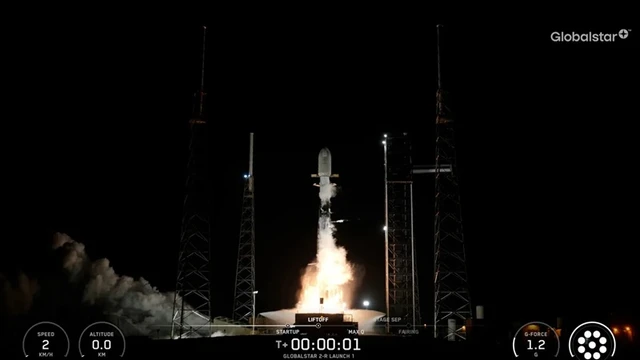
The first leg of this operational sprint unfolded at Cape Canaveral, Florida. At 21:12 ET, a Falcon 9 successfully deployed a cluster of eight satellites into low Earth orbit (LEO) for the telecommunications operator Globalstar. The performance of the first stage was particularly noteworthy: eight minutes after liftoff, it executed a nominal landing back at Cape Canaveral. The fact that this booster was on its 14th flight underscores the phenomenal durability of the materials and the precision of the underlying engineering.
While the Florida launch site was concluding its cycle, the second launch was already underway on the opposite coast at Vandenberg Space Force Base in California. With a 38-minute gap, a rocket ascended at 21:50 ET as part of the classified USSF-366 mission. Industry analysts, including experts from NextSpaceflight, suggest that this mission involves the deployment of a government satellite constellation based on the Starshield platform.
Starshield is a specialized, hardened iteration of the Starlink network, tailored specifically for U.S. national security requirements. The similarity in stage drop points compared to previous Starlink Group 15 missions virtually confirms the theory that SpaceX is effectively creating a closed government segment within its global communications network.
The culmination of this dual-launch maneuver was the landing of the second booster in the Pacific Ocean on the autonomous drone ship "Of Course I Still Love You." This vehicle demonstrated even greater endurance, returning to Earth after its 18th mission. Such cyclical hardware utilization radically drives down the cost of space access, transforming the rocket from an expensive consumable into a reusable asset.
Looking at the broader statistics, by mid-2026, the total number of Falcon 9 launches reached 96. Notably, approximately 75% of all operations are dedicated to the deployment of the Starlink constellation. This dominance demonstrates that SpaceX has effectively monopolized the small-satellite delivery market, creating a vertically integrated system where the company serves simultaneously as the launch provider and the satellite network operator.
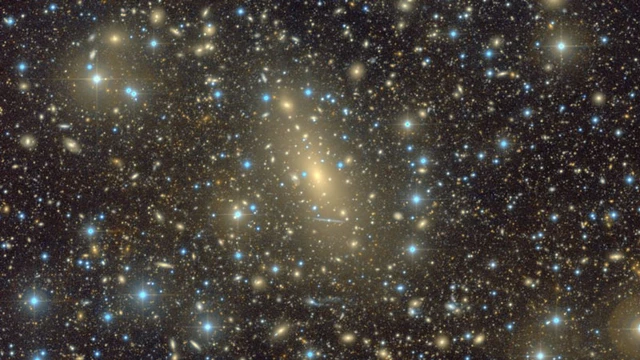 The Phenomenon of the Supermassive Galaxy IC 1101