The trajectory of automotive evolution is steering toward full automation, where seamless comfort increasingly takes precedence over driver engagement. Yet, this technological pivot may carry a hidden cost for our cognitive well-being. Recent neuroimaging research suggests that operating a manual transmission is far more than a mere technical skill; it is, in fact, a sophisticated cognitive workout. In an era of aging populations, such daily mental stimulation serves as a potent tool for preserving neuroplasticity and maintaining cognitive acuity.
The modern automobile is increasingly evolving into an intelligent gadget on wheels, designed to absorb the majority of routine operational tasks. However, researchers from the Institute for Development, Aging and Cancer at Tohoku University have discovered that delegating control to automation strips the driver of a critical cognitive stimulus. According to their findings, operating a vehicle with a manual transmission triggers intense activation of the prefrontal cortex—the region of the brain responsible for higher-order functions such as memory, concentration, and real-time decision-making.
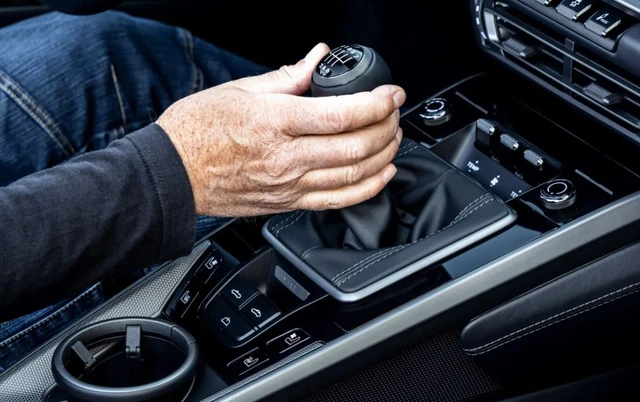
From a neurophysiological perspective, driving a "stick shift" is a complex multitasking operation requiring a high degree of synchronization. The driver must simultaneously evaluate vehicle speed, manage the clutch bite point, execute gear changes, and precisely modulate fuel delivery via the throttle. This continuous coordination generates a specific level of cognitive load that maintains a state of heightened attentional tension, preventing the brain from slipping into a passive mode of functioning.
Against the backdrop of the demographic challenges facing Japan, such daily activity takes on the character of low-intensity therapy. Regular stimulation of neural pathways through physical interaction with the transmission helps decelerate cognitive decline. Passive operation via automatic or semi-autonomous torque delivery systems simply cannot provide an equivalent level of mental engagement, transforming the journey from an active process into a mere mechanical displacement from point A to point B.
Despite these neurological benefits, market trends signal the precipitous twilight of the manual era. In Japan, the share of new vehicles equipped with manual transmissions has plummeted to a critical 1–2% of total sales. Today, the manual gearbox remains the exclusive domain of the budget segment: entry-level compact minivans and pickups, such as the Honda N-Van, Daihatsu Hijet, or Suzuki Carry, still feature simple 660cc three-cylinder engines with manual shifting. Meanwhile, mass-market models, including the Toyota Corolla and Honda Civic, have transitioned entirely to CVTs due to their superior compatibility with hybrid powertrains.
Paradoxically, an industry that systematically dismantled the manual gearbox in favor of efficiency is now attempting to simulate its effects. In 2023, Toyota patented a mechanical shifting system for electric vehicles. This device includes a full gear lever and clutch pedal; notably, the system can even simulate a "stall," recreating the exact stress factor that forces the brain to engage more actively.
Honda has charted a similar course, filing a patent for an electronic clutch for electric motorcycles slated for 2026. The system utilizes haptic feedback and specific acceleration algorithms during takeoff to recreate the sensory experience of an internal combustion engine. In doing so, the industry is acknowledging a fundamental truth: the physical sensation of control and the cognitive resistance of the machinery are intrinsic parts of the human experience—elements that cannot be replaced by simply pressing a "Drive" button.
 Driver Attention Monitoring in Tesla Electric Vehicles