The global automotive industry is currently navigating a turbulent period of transformation, as the initial euphoria surrounding electric vehicles collides with stark economic realities. Industry titans are being forced to recalibrate their strategies, shifting their focus from consumer-facing mobility toward industrial-scale energy infrastructure. Honda’s decision to prioritize stationary energy storage systems serves as a prime example of this diversification in battery technology application. This pivot represents a strategic retreat from the volatility of the EV market in favor of the stable, sustained demand emanating from data centers and power grids.
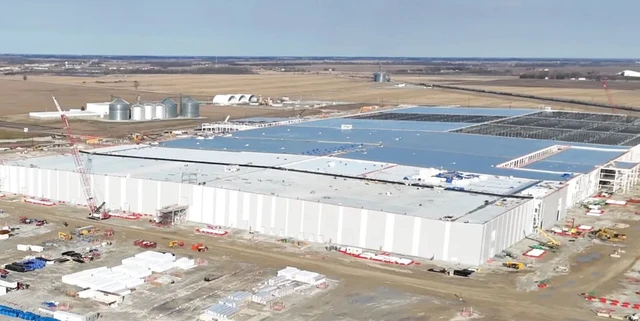
Japanese automotive titan Honda is executing a strategic pivot, redirecting its manufacturing capabilities away from electric vehicle production toward the development of batteries for stationary energy storage systems. This move marks the culmination of a turbulent period; just three months prior, the company was forced to scale back its EV programs in the United States. The Ohio plant—a joint venture with LG Energy Solution originally envisioned as the heart of the brand's electric transition—is now being repurposed. Rather than powering passenger vehicles, its output will be channeled into data centers, where the demand for stable, uninterruptible power has become critical.
The drivers behind this abrupt shift are rooted in macroeconomics and the shifting political landscape of the U.S. market. The slump in EV demand is largely a consequence of the expiration of tax incentives that previously stimulated both the production and consumption of "green" transport. The market experienced a classic pull-forward effect: consumers rushed to purchase vehicles before last September to capitalize on government subsidies, inevitably leading to a sharp decline in sales in subsequent periods.
For Honda, this volatility resulted in significant financial losses and necessitated a deep structural realignment. In the previous fiscal year, the company recorded a $15.7 billion write-down—the cost of recalibrating its EV strategy and attempting to stabilize its waning position in the Chinese market. Despite these massive impairments, the strategic alliance with LG Energy Solution remained intact, enabling Honda to pivot rapidly toward the stationary storage segment—a path previously blazed by Tesla, Ford, and General Motors.
The stationary energy storage market is currently exhibiting impressive momentum, maintaining an annual growth rate of 32%. In the first quarter of this year alone, installed capacity reached 9.7 GWh, equivalent to the battery volume of 120,000 electric vehicles. Forecasts suggest even more aggressive expansion: by the end of the decade, annual installations could reach 110 GWh, effectively tripling the current market size.
Tesla’s trajectory confirms the high profitability of this sector. The Megapack and Powerwall lines contribute approximately 30% of the company's gross profit, nearly doubling the margins seen in vehicle sales. This is because stationary systems are becoming the bedrock of the modern energy grid. Beyond powering data centers, they play a pivotal role in grid stabilization—smoothing out consumption peaks and compensating for the intermittency of wind and solar generation as battery cell costs continue to plummet.
Parallel to this industrial pivot, Honda continues to explore ways to soften the consumer transition from internal combustion engines to electric propulsion. A recent patent for an electronic clutch for electric motorcycles exemplifies this approach. The system, featuring a launch-acceleration function and haptic feedback, is designed to simulate the physical sensations of a combustion engine, creating an emotional bridge between classical mechanics and the digital era of mobility.
 Driver Attention Monitoring in Tesla Electric Vehicles