The boundary between private introspection and legal evidence is rapidly dissolving in the era of Large Language Models. Modern neural networks have evolved beyond mere productivity tools, transforming into digital repositories for our most intimate thoughts and uncertainties. A high-profile trial concerning fires in Los Angeles has starkly illustrated how chat histories can be leveraged as a cornerstone of the prosecution's case. This precedent forces society to confront a fundamental question regarding the nature of privacy and the admissibility of interpreting digital footprints as evidence of criminal intent.
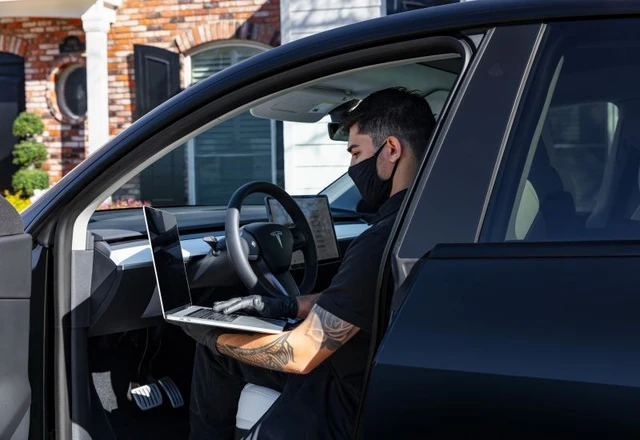
The catastrophe in the Pacific Palisades district stands as one of the most devastating wildfires in Los Angeles' history: twelve lives lost and nearly seven thousand structures razed. At the center of the federal prosecution is Jonathan Rinderknecht, a former Uber driver. Investigators have constructed a precise timeline of events: an alleged arson on New Year’s Eve, followed by subterranean smoldering within plant roots, and finally, a catastrophic escalation fueled by the Santa Ana winds. Rinderknecht faces three federal charges that could collectively result in up to forty-five years of imprisonment.
However, the defining characteristic of this trial has been the use of ChatGPT logs as pivotal evidence. The prosecution presented the defendant's chat history as a sort of digital diary, purporting to reveal his internal state and intentions. The case files include requests for AI-generated images depicting affluent lifestyles continuing undisturbed against a backdrop of raging fires, as well as existential inquiries directed at the neural network regarding the roots of his own anger. Prosecutors paid particular attention to a screen recording in which Rinderknecht questioned the AI on whether an individual could be held liable if a fire were sparked by a carelessly discarded cigarette. The prosecution interpreted this not as a search for legal information, but as a calculated attempt to pre-construct a defense and mislead the court.
The defense, conversely, maintained that dialogues with a chatbot, stripped of their context, cannot serve as proof of an actual crime. In the absence of direct evidence linking Rinderknecht to the ignition of the fire, the prosecution attempted to rely on a psychological profile synthesized through his prompts.
The turning point came during the testimony of one of the jurors. He admitted that he also engages in similar conversations with artificial intelligence, using it as a tool for reflection or "stress-testing" his thoughts. This admission effectively dismantled the prosecution's premise—that idiosyncratic or strange AI queries are inherently indicative of sinister intent. Under the American legal system, a verdict must be unanimous; in this instance, the jury was split: ten leaned toward innocence, while two favored conviction. The result was a mistrial. Judge Anne Huang has scheduled a retrial for October.
This case exposes a critical vulnerability for the modern LLM user. Despite marketing promises of privacy, the policies of OpenAI, Google, and Anthropic explicitly provide for the transfer of data to law enforcement upon legal request. Every prompt sent to Claude or Gemini is stored in the cloud, transforming into a potential archive that can be subpoenaed years later.
The upcoming October trial carries implications far beyond the fate of one individual. Should the court accept AI dialogues as substantive evidence, it would set a dangerous precedent: any attempt by a user to "think out loud" or explore hypothetical scenarios via a chatbot could be interpreted as criminal planning or an admission of guilt. Otherwise, the judiciary will affirm that interaction with a neural network is merely a form of digital noise—one that cannot substitute for physical evidence.

 The Price of Acceleration: CXMT’s Rapid Push into Memory