The modern hardware industry is confronting a systemic economic challenge: the cost of components is outpacing the purchasing power of the average consumer. This trend is carving a profound divide between those willing to pay a premium for innovation and the mass market, where price has become the definitive factor. Consequently, the traditional platform upgrade cycle may be supplanted by a strategy of long-term coexistence across hardware generations. The market is effectively splitting into two autonomous spheres, each governed by diverging demands for cost and performance.
The personal computing industry is entering a phase of profound transformation—a shift that can best be described as a "tale of two kingdoms." Economic headwinds, driven by the rising cost of memory and critical semiconductor components, are no longer distributed evenly across all segments. While the premium sector remains resilient to price fluctuations, the mass market has reached a critical juncture where even a marginal increase in component costs can render a system build economically unviable.
This dichotomy is clearly reflected in the numbers. For a user assembling a high-performance workstation costing $5,000, an additional expenditure of $300–$400 on RAM is a negligible margin of error. However, for the budget segment, such a sum becomes an insurmountable barrier, forcing the buyer to either compromise on specifications or abandon the system upgrade entirely.
In response to this crisis, manufacturers are pivoting their product strategies. We are seeing a series of strategic maneuvers: Intel is adjusting the pricing of its Arrow Lake Refresh lineup, while AMD is reintroducing battle-tested solutions like the Ryzen 7 5800X3D and expanding its portfolio with models such as the Ryzen 7 7700X3D. Similar trends are emerging in the mobile segment, where the focus has shifted toward more accessible platforms, including Intel Wildcat Lake and energy-efficient solutions from the Qualcomm Snapdragon C series.
In the long term, these market dynamics may lead to a fundamental shift in the very concept of hardware lifecycles. Rather than the traditional generational turnover—where a new platform rapidly displaces its predecessor—the industry may move toward a model of coexistence between two distinct socket tiers: a premium tier for enthusiasts and a mass-market tier designed for an extended lifecycle. This is not merely about increasing the number of physical sockets, but rather a deliberate effort to prolong the viability of older platforms to ensure computers remain accessible to the majority of users.
A prime example of this strategy is the treatment of the Raptor Lake family. Despite the arrival of newer generations, these processors remain a critical component of the product portfolio, and their support may extend for several more years. Rumors regarding the arrival of "Raptor Lake Next" by 2027, maintaining compatibility with the LGA 1700 socket, further confirm this trend toward the "deceleration" of updates for the mass market.
For tech giants, this transition is dictated by stark financial necessity. An analysis of revenue from client computing divisions reveals a troubling trend: growth is often driven not by increased sales volume, but by a rise in the Average Selling Price (ASP). In an environment where producing certain budget products becomes unprofitable, manufacturers are forced to make compromises in specifications simply to maintain a market presence.
In this new paradigm, products like Nova Lake are no longer intended as universal solutions. Instead, they are positioned as the technological zenith—tools for those willing to pay for peak performance regardless of cost. Consequently, the PC market is ceasing to be a unified space, evolving instead into a stratified ecosystem where cutting-edge innovation becomes the privilege of a narrow elite, while the mass user receives stability and affordability through the use of proven, albeit aging, platforms.
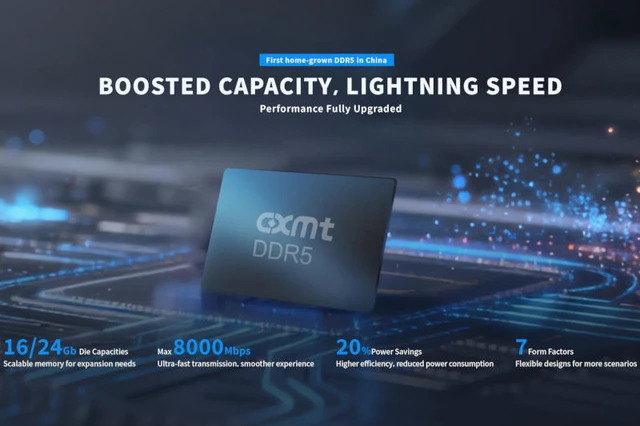 The Price of Acceleration: CXMT’s Rapid Push into Memory