The meteoric rise of artificial intelligence has ignited an unprecedented arms race for capacity within the semiconductor industry. Tech titans are pouring hundreds of billions of dollars into infrastructure, striving to satiate the insatiable appetite of data centers for high-performance memory. Yet, beneath this veneer of optimism lies a classic market pitfall—one that threatens to trigger a profound crisis of overproduction. The stability of the entire ecosystem now hinges upon whether these massive AI investments can ultimately deliver on their economic promises.
The modern DRAM market is currently operating under extreme tension. While industry leaders attempt to convince investors that the sector's characteristic boom-and-bust cycles are a relic of the past, the expert community remains skeptical. There is a well-founded concern that by 2028, the conventional memory industry could face a critical supply glut.
The fundamental issue lies in the fact that current expansion plans are predicated on an optimistic scenario: the assumption that demand from data centers will remain consistently high for several years. However, this chain of dependency is precarious. Should the actual economic returns from AI implementation fall short of expectations, corporations will slash infrastructure spending, triggering an immediate collapse in memory demand.
The history of the semiconductor market mirrors a brutal process of natural selection. In the 1990s, roughly twenty companies competed in the memory segment; today, it has evolved into a tight oligopoly dominated by Samsung, SK hynix, and Micron. This consolidation renders the system hypersensitive to fluctuations: during growth phases, stock valuations soar beyond rational limits, while even a minor downturn can lead to a catastrophic crash. It is precisely this volatility that leads some major investors—including Michael Burry—to view the current investment boom as "the beginning of the end," prompting them to take short positions against the industry's key players.
The scale of expansion is staggering: Samsung and SK hynix intend to invest approximately $1.5 trillion into capacity development over the next 15 years. Although the primary facilities will not come online until closer to 2030, long-term contracts cannot entirely mitigate market risks. Several years elapse between the decision to build and the actual product launch—a window during which market dynamics can shift radically. Furthermore, an acute shortage of skilled labor remains a significant bottleneck, slowing the physical expansion of fabrication plants.
It is crucial to differentiate between memory types, as they are subject to distinct risk profiles. The HBM (High Bandwidth Memory) segment possesses a high degree of protection against overproduction, as it is engineered for specific customer requirements and deeply integrated into accelerator architectures. Conversely, commodity DRAM functions essentially as a fungible asset; its oversupply could become a reality by 2029.
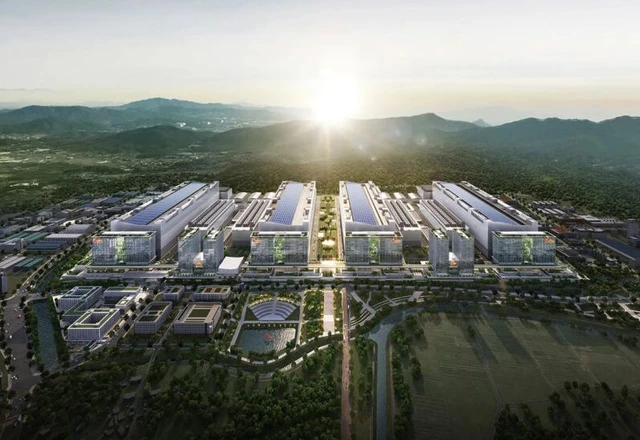
Adding another layer of uncertainty is the ascent of Chinese manufacturers, most notably CXMT. According to Morgan Stanley analysts, China will account for nearly one-third of all global capacity growth by 2028. The aggressive drive by Chinese players to penetrate international markets introduces further instability. Should production growth in China outpace market demand or leapfrog competitors, it could trigger predatory pricing and destabilize the entire global memory industry.
 Energy Autonomy: The Extreme Edition