Space debris and orbital decay have emerged as the primary existential threats to modern astronomy. The Swift Observatory, a cornerstone for the study of gamma-ray bursts, now teeters on the brink of atmospheric reentry and inevitable incineration. An ambitious rescue mission, employing a specialized space tug, was envisioned as a landmark breakthrough in the burgeoning field of on-orbit satellite servicing. Instead, a series of technical failures has transformed the operation into a costly masterclass in deep-space risk management.
The saga of the Swift observatory is reaching a dramatic conclusion. The spacecraft, once an indispensable tool for astrophysicists, has descended to a critical altitude of approximately 340 kilometers. At this threshold, the drag from the upper layers of the atmosphere becomes significant, inducing intense deceleration. The situation has been further exacerbated by heightened solar activity; powerful flares and coronal mass ejections are expanding the atmosphere, effectively accelerating the object's descent and turning its orbit into a countdown toward final reentry and incineration.
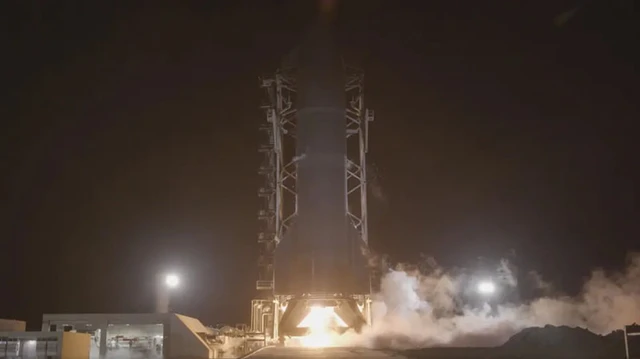
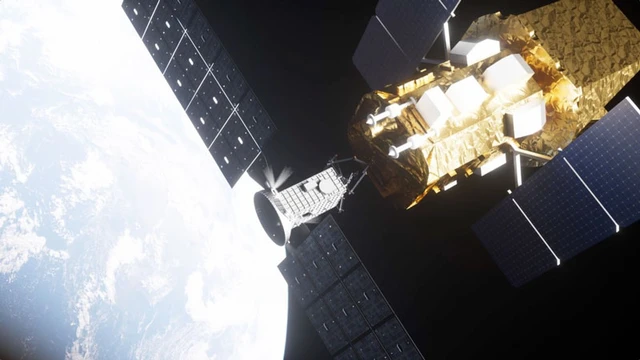
In a last-ditch effort to avert this catastrophe, an urgent intervention was launched. Katalyst Space Technologies, in collaboration with NASA, developed and deployed a dedicated space tug named Link. The project was characterized by an unprecedented development cycle—the vehicle was designed and built in just one year. On July 3, a Pegasus XL rocket delivered Link into orbit with a singular objective: to rendezvous with Swift, capture it, and boost its altitude by several hundred kilometers, thereby extending the observatory's scientific lifespan.
However, the harsh realities of orbital mechanics proved more unforgiving than the initial calculations. Shortly after achieving its target trajectory, the tug encountered a cascade of technical failures. The critical blow came when two of its three reaction wheels failed, leading to a loss of stabilization and forcing the spacecraft into a multi-axis tumble. The reaction control system, intended to maintain spatial orientation, was only partially functional, effectively stripping engineers of direct control over the vehicle.
The battle to stabilize the tug was grueling. By early August, specialists managed to reduce the rotation rate from 9 to 1.47 degrees per second. To achieve this, they were forced to utilize electric propulsion systems originally intended for orbital maneuvering rather than stabilization. In an attempt to compensate for the hardware failures, an updated flight software stack was uploaded to Link on August 11. Despite these efforts, final analysis concluded that the safe capture and subsequent towing of Swift had become technically impossible.
Consequently, NASA and Katalyst Space Technologies have formally terminated the orbit-raising mission. The Swift observatory will likely burn up in the atmosphere before the end of the year. Nevertheless, the Link tug will not be abandoned; it will continue to perform a series of rendezvous and station-keeping maneuvers in close proximity to its target. These operations will allow the team to gather unique data on the interaction between two objects in space, providing a foundational blueprint for future orbital servicing missions.
The cost of this experiment exceeded $30 million under the baseline contract, and the final tally is expected to be higher. However, within the aerospace industry, such losses are often viewed as investments in institutional knowledge. The attempt to save Swift has demonstrated the limits of rapid satellite deployment and highlighted the extreme complexity of managing spacecraft under conditions of partial orientation system failure.
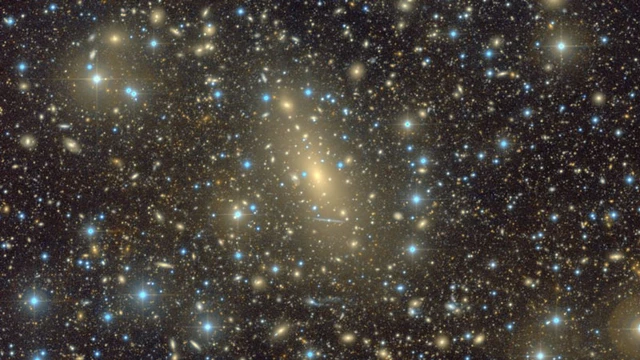 The Phenomenon of the Supermassive Galaxy IC 1101