The global semiconductor market is undergoing a period of tectonic shifts, where the demand for high-performance data storage has emerged as a critical catalyst for the evolution of artificial intelligence. Against this backdrop, China is aggressively pursuing total technological autonomy, cultivating robust domestic ecosystems for memory production. YMTC’s move toward public markets via its parent entity signals a new chapter in the Eastern giant's expansion. This is far more than a mere financial maneuver; it is a calculated strategic play to ascend the global 3D NAND hierarchy.
Recent activity across Eastern financial hubs underscores a meteoric rise in the valuation of memory manufacturers. The successful debut of CXMT, which by August evolved into one of the region's most valuable players with a valuation of $524 billion, has set a powerful precedent. Against this backdrop, YMTC—a pivotal player in the flash memory segment—is initiating its own IPO, seeking to raise nearly $5 billion with a projected market capitalization ranging from $41 billion to $49 billion.
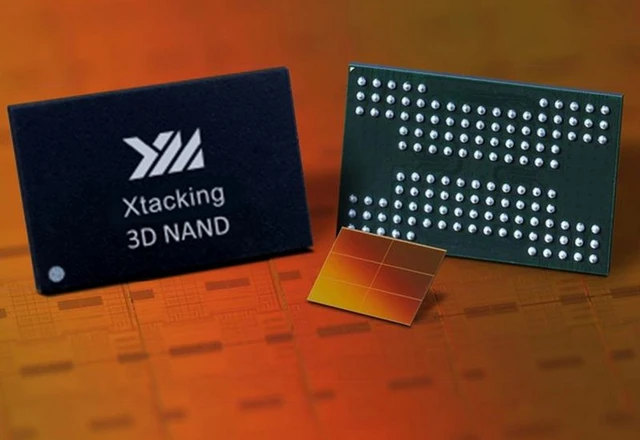
YMTC’s technological trajectory has become one of the industry's most striking phenomena. Established in 2026 in Wuhan, the company has rapidly closed the gap with global leaders, unveiling 267-layer 3D NAND memory. This technology, predicated on the vertical stacking of memory cells to maximize recording density, enables the creation of massive-capacity drives while maintaining a compact form factor. This pursuit of density has already translated into market dominance: YMTC has ascended to the top three global suppliers of solid-state memory, commanding a 14% share of the global market.
From a financial and legal perspective, the IPO is built upon a sophisticated architecture. It is not YMTC itself hitting the Shanghai Stock Exchange, but rather its parent entity, CCSH Corporation, which derives over 90% of its revenue from the subsidiary's operations. The plan involves the issuance of between 1.98 and 2.43 billion new shares. This maneuver is critical: while YMTC has been under US sanctions since 2022, the parent company remains free of formal regulatory grievances, clearing a legal path for capital injection.
The company's economic indicators reflect explosive growth, fueled by the broader AI boom and the resulting memory crunch. In the first quarter, YMTC’s net profit reached $5 billion, effectively surpassing the totals for the entire previous year. This surge was catalyzed by favorable market dynamics, with NAND memory prices skyrocketing by 173% compared to previous averages. Consequently, profit margins climbed from 35.3% to a staggering 76.8%, while first-quarter revenue approached $7 billion—a fivefold increase year-on-year.
The proceeds will be allocated across two strategic pillars. Two-thirds of the capital will be dedicated to the deep modernization of production lines, enabling the scaling of next-generation memory production. The remainder will be invested in research and development to sustain the company's aggressive technological momentum.
This IPO is poised to become one of the three largest in the history of the Shanghai exchange, joining the ranks of SMIC and CXMT. The event not only validates the financial viability of China's memory sector but also underscores its expanding influence on the global technological landscape—a realm where control over semiconductor manufacturing has become the primary instrument of economic leverage.
 The Dawn of the 2nm Era in the New iMac