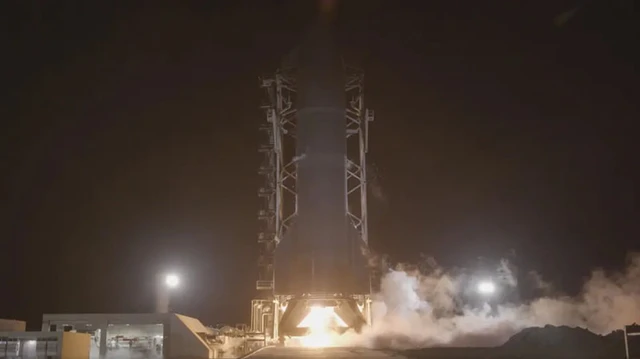
The pursuit of full reusability in launch systems has emerged as the defining challenge of modern astronautics, fundamentally shaping the economic viability of future interplanetary missions. SpaceX continues its aggressive testing phase for Starship, with the mid-air capture mechanism serving as a pivotal component of the architecture. However, transitioning from the recovery of a booster to the capture of an orbital spacecraft entails an exponential increase in technical risk. The decision to defer this maneuver signals a strategic shift toward rigorous data verification before making the final push.
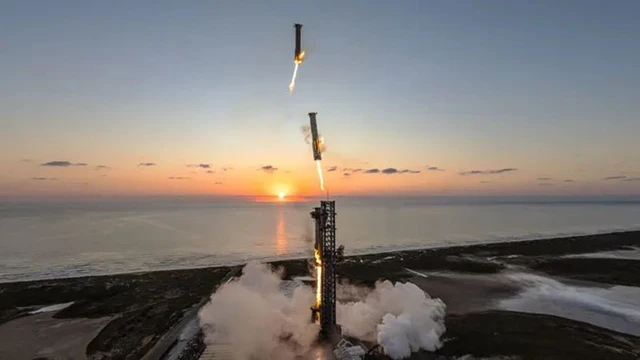
The concept of returning a spacecraft directly to the Mechazilla launch tower is more than a mere engineering feat; it represents a fundamental paradigm shift in rocket operations. While the system has successfully managed the recovery of the Super Heavy first stage—which returns with predictable dynamics—the Starship upper stage presents an entirely different level of complexity. Returning from orbit, the vehicle carries immense kinetic energy and endures extreme thermal loads, making precision positioning for the "catch" by the mechanical arms a mission-critical challenge.
The current schedule adjustments and the postponement of the catch attempt are driven by the need for a granular analysis of previous flight data. Engineers are focusing specifically on data from the thirteenth test flight, which concluded with a splashdown in the Indian Ocean. The fact that the ship maintained its structural integrity after traversing the dense layers of the atmosphere was a pivotal milestone. Specialists are now scrutinizing the condition of the thermal protection system and the hull's behavior under supersonic flows to eliminate any trajectory deviations during future tower returns.
Beyond the technical hurdles, the process is further slowed by the bureaucratic machinery of regulatory bodies. Securing permits for a controlled descent and landing near populated or operational zones requires protracted coordination. In this context, SpaceX's caution is justified: the risk of damaging the unique Mechazilla launch infrastructure due to a calculation error or a command latency would be prohibitively high.
The geopolitical landscape also weighs on the pace of development. Starship is the centerpiece of NASA's lunar program, which is currently locked in a fierce competition with China's space ambitions. Pressure from government stakeholders forces SpaceX to strike a delicate balance between rapid iteration and system reliability. Nevertheless, the company's ambitions remain steadfast: the goal is to recover the vehicle and launch it on its second flight by the end of this year or early next.
The upcoming fourteenth test flight will be a watershed moment, as the spacecraft will enter a full orbit for the first time, moving beyond suborbital hops. Given the new variables and the uncertainties of orbital flight, the decision to forgo the catch attempt this time appears strategically sound. This allows SpaceX to first master the orbital segment of the mission before proceeding to the most spectacular and demanding phase: returning Starship into the embrace of the launch tower.
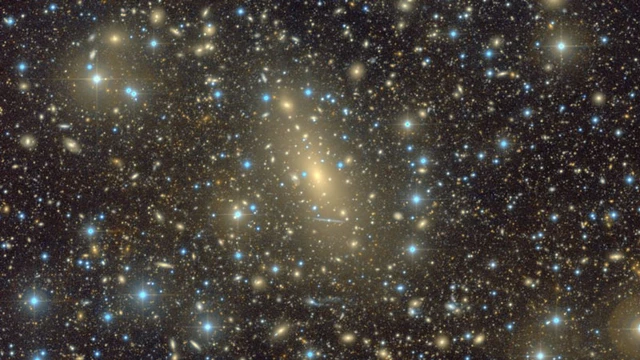 The Phenomenon of the Supermassive Galaxy IC 1101