The transition to fully autonomous urban mobility is no longer a theoretical exercise; it has evolved into a formidable engineering and logistical challenge. Leveraging the vast resources of Amazon, Zoox is fundamentally reimagining the urban vehicle, abandoning traditional automotive architecture in favor of a purpose-built robotaxi. Recent platform updates signal a pivotal shift from experimental prototyping toward the development of a production-ready commercial product. By prioritizing human-centric design and navigating complex regulatory landscapes, Zoox is ushering in a new era of public transit.
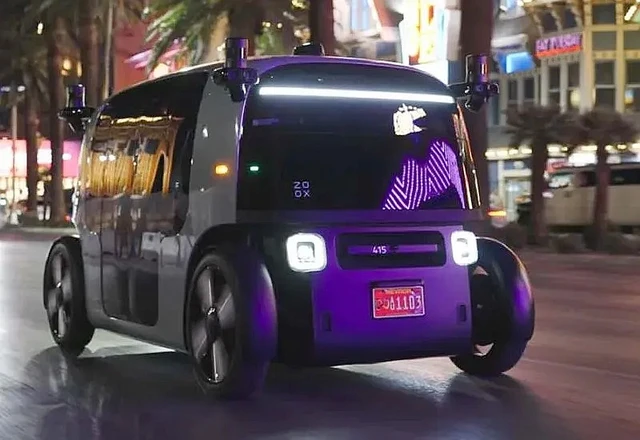
Zoox’s approach to autonomous transport represents a fundamental departure from the strategies of its competitors, who often attempt to retrofit existing vehicle models for self-driving capabilities. Instead, the company has engineered a bespoke, symmetrical vehicle designed from the ground up as a "living room on wheels." By completely eliminating the steering wheel, pedals, and traditional controls, Zoox has maximized the interior volume to create an optimized environment for four passengers.
The vehicle's engineering core provides exceptional maneuverability within dense urban environments. Equipped with four-wheel steering, the robotaxi can operate with equal efficiency in either direction, effectively rendering traditional U-turns obsolete. Safety and navigation are managed by a sophisticated sensor suite comprising 40 units—including LiDAR, radar, infrared sensors, and high-resolution cameras—allowing the vehicle to reach speeds of up to 120 km/h while maintaining total situational awareness.
The latest design iteration focuses heavily on passenger ergonomics and psychological well-being. The interior has transitioned to a brighter color palette with an increased use of soft-touch materials. This shift does more than just cultivate a serene atmosphere; it serves a practical purpose, as the high-contrast, light-colored surfaces make it significantly easier for passengers to locate small dropped items, such as smartphones.
This meticulous attention to detail extends to the updated Human-Machine Interfaces (HMI). The touchscreen is now larger and more intuitive, gadget fixation on charging panels has been refined, and cup holders have been expanded. By retaining premium aesthetic touches—such as the panoramic sunroof and a "starlit sky" ceiling illumination—Zoox aims to curate an experience that feels entirely distinct from a conventional car ride.
Exterior refinements are similarly geared toward enhancing safety and environmental communication. Reconfigured reflective elements increase the vehicle's visibility to other road users. Particular emphasis has been placed on the audio interface: the integration of new speakers and microphones into the door panels enables seamless two-way communication. This is critical for interacting with pedestrians and ensuring rapid coordination between technical support teams and emergency services.
The transition to mass production involves navigating not only technical but also significant regulatory hurdles. Because Zoox’s architecture completely bypasses federal standards that mandate manual controls, the company is engaged in an active dialogue with the National Highway Traffic Safety Administration (NHTSA). Securing these necessary exemptions is the final milestone before a full-scale market entry.
The company's industrial ambitions are underscored by the opening of its manufacturing facility in Hayward, California. With a production capacity of up to 10,000 robotaxis per year, Zoox is clearly positioned for rapid scaling. Currently, the system is undergoing final validation in major U.S. transport hubs, including San Francisco, Las Vegas, Austin, and Miami, where free rides are offered to gather data and refine user scenarios. The commercial rollout, which will transform these autonomous journeys into a paid service, is slated for the end of this year.
 The Evolution of the Apple Home Ecosystem