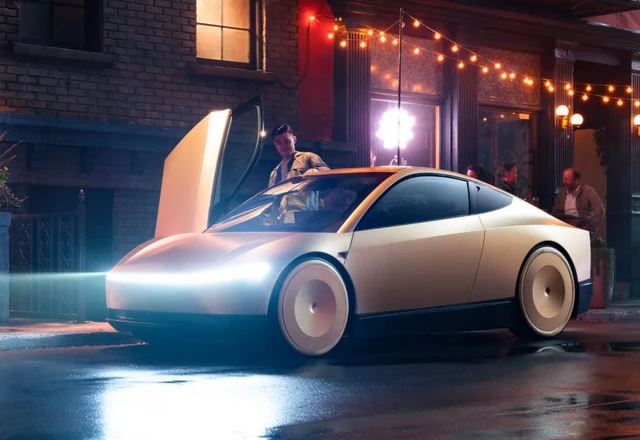
The shift from private vehicle ownership toward the "Transportation as a Service" (TaaS) paradigm remains the central ambition of modern mobility. For years, Tesla has walked a fine line between grandiose promises and a sluggish pace of execution, casting a shroud of uncertainty over its technological roadmap. The deployment of the Cybercab on the streets of Austin marks a pivotal transition from laboratory prototypes to real-world operationality. Entirely devoid of traditional controls, this vehicle serves as the physical manifestation of the company's fundamental bet on the future of urban infrastructure.
Tesla's technological trajectory has always been defined by a certain paradox: the sheer ambition of its vision often outpaces the practicalities of its implementation. However, the rollout of the production-ready Cybercab robotaxis shifts the conversation from theoretical speculation to empirical road data. While production began last quarter, the full-scale deployment on public roads in Texas serves as the definitive signal the market has been awaiting.
The defining characteristic of the Cybercab is its radical departure from conventional ergonomics. By completely eliminating the steering wheel and pedals, Tesla has transformed the vehicle from a tool of manual control into an autonomous capsule. During the current operational phase in Austin, the company is adhering to a cautious protocol: every vehicle is accompanied by a safety observer.
There is a nuanced psychological and regulatory detail in the placement of this personnel. In a two-seat cabin where the left and right seats are functionally identical, the observer occupies the right side. In the context of right-hand traffic in the U.S., this serves as a clear visual demonstration that the human is not attempting to simulate the role of a driver, even in the absence of physical controls. In doing so, Tesla is not merely testing software, but is actively crafting a new visual lexicon for how autonomous vehicles interact with the urban environment.
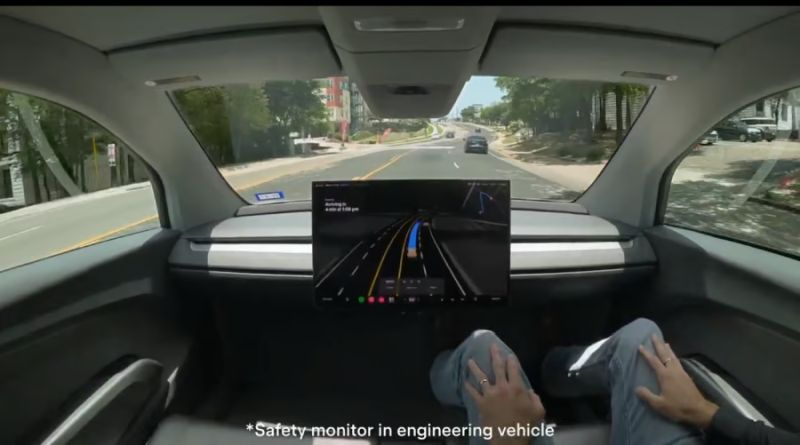
While the exact scale of the current deployment in the Texas capital remains officially undisclosed, leaked footage confirms that production units are now navigating city streets. Current passenger capacity is limited specifically by the requirement for a company employee to be on board. To transition to a fully commercial service, Tesla must overcome two primary hurdles: production scaling and legislation. Although some sources suggest that Cybercab production already numbers in the hundreds, the primary obstacle remains the regulatory framework, which in the U.S. traditionally lags behind the pace of technological innovation.
This project is far more than a simple expansion of the model lineup; it is the cornerstone of the company's global strategy. To realize the Robotaxi concept, Tesla took a bold, high-stakes gamble, pivoting away from the development of a more affordable $25,000 electric vehicle equipped with traditional controls.
Such a maneuver underscores management's conviction that autonomous systems will completely disrupt the passenger transport market. In this paradigm, personal vehicle ownership in developed regions—characterized by high-quality road networks and stable connectivity—becomes redundant. The Cybercab is designed to pivot the automobile from a capital-intensive asset into a streamlined, on-demand utility service.
 The Evolution of the Apple Home Ecosystem