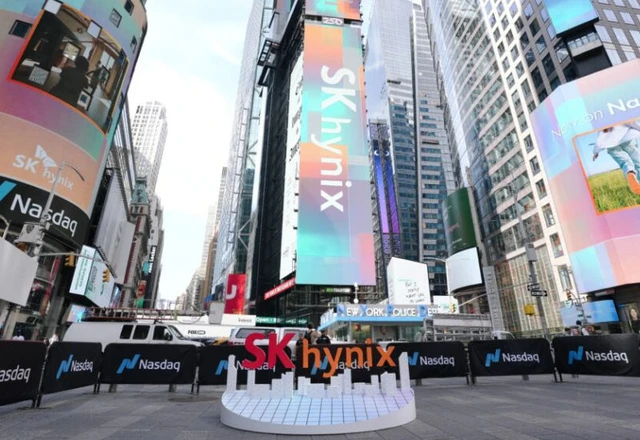
The global AI arms race has shifted its center of gravity, moving away from algorithmic refinement toward the development of the hardware infrastructure required to sustain it. SK hynix’s debut on the Nasdaq serves as a watershed moment, underscoring the tech industry's acute reliance on high-speed memory. The market's response—a surge in share prices—signals that the world has entered an era of unprecedented scarcity in computational resources. The company is now positioning itself as the primary provider of the "fuel" driving the neural network revolution.
SK hynix's debut on the New York Stock Exchange via depositary receipts was more than a financial victory; it served as a market validation of the company's strategic trajectory. A 13% surge to $168 in the first trading session reflects immense investor optimism. Yet, beneath the ticker symbols lies a profound technological shift: the memory industry is evolving from a commodity market into a strategic pillar of high-tech manufacturing.
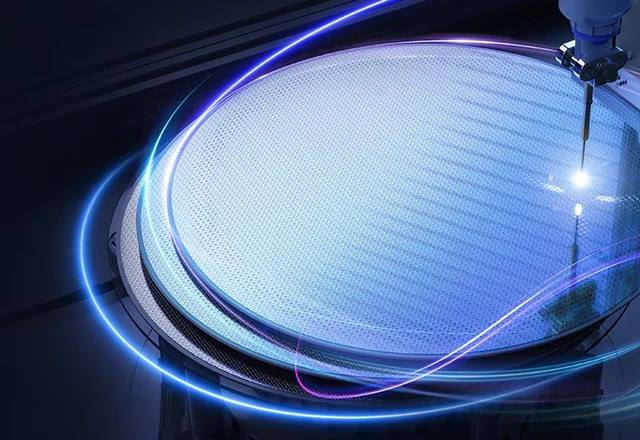
At the heart of this boom is High Bandwidth Memory (HBM). Unlike traditional modules, HBM utilizes a vertical stack of dies positioned in immediate proximity to the GPU. This architecture radically accelerates data transfer speeds—a critical requirement for training and deploying Large Language Models (LLMs). This specific innovation has rendered SK hynix an indispensable partner for titans like NVIDIA, creating a scenario where demand consistently outstrips even the most aggressive forecasts.
SK Group leadership is candid about the fact that the current market climate is fundamentally different from any previous cycle. Historically, the memory market operated on a "boom and bust" cycle, where overproduction inevitably triggered price collapses. Today, however, we are witnessing a structural transformation. The emergence of autonomous AI agents and the advancement of humanoid robotics are generating a constant, exponential demand for memory capacity that cannot be met by simply scaling existing production lines. Even ambitious plans to double output over the next five years seem insufficient when measured against the appetites of the world's largest tech corporations.
The scale of upcoming investments underscores the company's resolve. In South Korea, a massive production cluster with a projected cost of up to $390 billion is slated for deployment. Simultaneously, SK hynix is integrating itself into the U.S. technological ecosystem, beginning with a $4 billion chip packaging facility in Indiana.
Notably, the U.S. administration is pushing for even deeper localization of production. As part of a strategy to ensure technological sovereignty, the U.S. is incentivizing Korean manufacturers to relocate core capacities to American soil. Consequently, SK hynix finds itself at the epicenter of a geopolitical and economic tug-of-war, where control over memory production is equivalent to controlling the pace of global AI development.
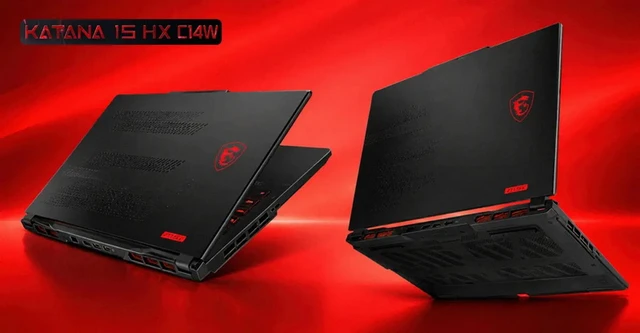 MSI Katana 15 HX and the Memory Paradox