The global semiconductor market has become the epicenter of a clash between the bullish projections of manufacturers and the pragmatic calculus of financial analysts. While tech giants continue to signal protracted shortages, experts are identifying clear indicators that pricing is nearing stabilization. The emergence of new global contenders is poised to fundamentally shift the balance of supply and demand. As the current memory growth cycle reaches its zenith, the industry is pivoting toward a new phase of market equilibrium.
The memory manufacturing industry is currently gripped by a paradox: while major vendors, including Micron, insist that component shortages will persist and even intensify next year, this rhetoric appears strategically designed to sustain high price points and secure long-term contracts. However, the analytical community views the landscape differently, suggesting that the pace of price appreciation has already begun to decelerate.
Analysts at Morgan Stanley indicate that the current cycle of price expansion will enter its final phase by the fourth quarter of this year. The rapid surge in costs is expected to give way to moderate growth or stagnation as available supply volumes increase. Data from Bernstein Research corroborates this trend: while DRAM contract prices previously saw an aggressive 65% spike, the growth rate slowed to just 17% in the third quarter. This trajectory points to a clear market cooling and a gradual saturation of supply chains.
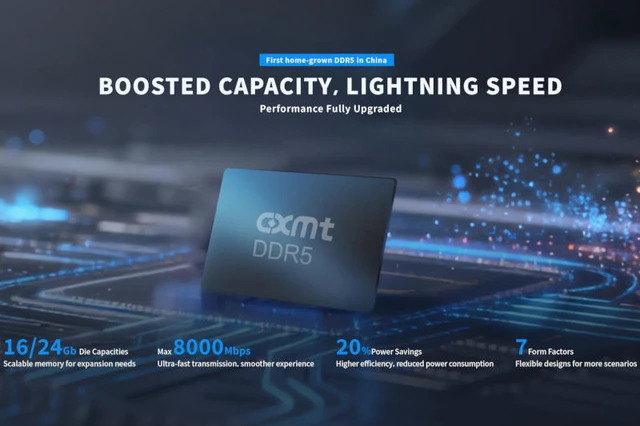
A pivotal factor reshaping the global landscape is the ascent of Chinese manufacturers. While Western firms maintain a cautious stance, Chinese players are scaling their capacities with unprecedented boldness. Most notable among them is CXMT, which is effectively challenging the established global order.
According to UBS forecasts, between late 2025 and the end of 2028, CXMT intends to nearly double its production capacity, increasing monthly wafer starts from 240,000 to 466,000. In terms of global market share, this represents a jump from 7% to 10%. Such an expansion will inevitably increase supply and exert significant downward pressure on the pricing strategies of traditional industry leaders.
In the long term, analysts are convinced that CXMT’s entry into the top three global memory producers is merely a matter of time. This shift will not only redraw the geography of production but also introduce new levers for price regulation, rendering the era of unchecked memory price hikes a relic of the past.
 The Price of Acceleration: CXMT’s Rapid Push into Memory