The global gaming hardware market is grappling with unprecedented pressure from escalating production costs. A persistent semiconductor crisis, coupled with a meteoric surge in component pricing, is forcing tech giants to recalibrate their financial strategies. In a move that underscores this volatility, Microsoft has announced the third price hike in rapid succession for the Xbox Series lineup. This decision exposes a profound disconnect between consumer expectations and the stark economic reality of modern high-performance hardware.
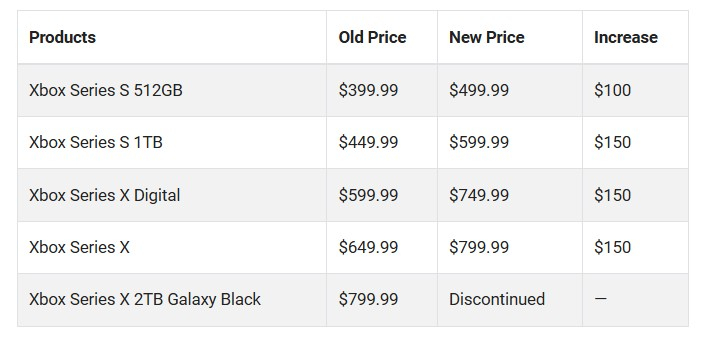
Starting August 1, Xbox Series gaming systems will undergo a substantial price hike worldwide. This move is the culmination of a protracted supply chain crisis, which had already prompted targeted price adjustments last May and October. The current price revision is far more aggressive: the 512GB Xbox Series S will increase by $100, reaching a price point of $499.99. An even steeper blow will hit the high-performance models—all Xbox Series X variants, as well as the 1TB Xbox Series S, will see an immediate $150 price jump. Simultaneously, the company has made the strategic decision to discontinue production of the flagship 2TB Xbox Series X.
The catalyst for these drastic changes is a precipitous surge in the cost of critical components. The prices of RAM and solid-state drives (SSDs)—the cornerstones of modern console performance—have skyrocketed by more than 2.5 times. Analyst forecasts are even more sobering, suggesting that the cost of these components could double again by autumn 2027.
This situation is further complicated by the inherent structural characteristics of the console gaming business model. Unlike the smartphone or laptop markets, where profit is baked into the hardware price, consoles have traditionally followed a "loss-leader" strategy. Under this model, hardware is often sold below the cost of production, with the primary profit margins realized through the long-term sale of games, subscriptions, and services. As component costs grow exponentially, this model becomes financially unsustainable, forcing the manufacturer to shift a portion of the overhead onto the consumer.
Recognizing the risk of alienating its user base due to a higher barrier to entry, Microsoft is introducing several mechanisms to soften the fiscal impact. A key measure is the optimization of "Buy Now, Pay Later" (BNPL) programs, allowing customers to spread the cost of hardware across short-term, interest-free installments. Amazon users will benefit from even more flexible terms, including interest-free financing for up to 12 months.
In tandem, the company is pivoting toward the development of the secondary market. In collaboration with retail partners, trade-in programs are being launched, enabling users to exchange legacy consoles for cash or gift certificates. This not only incentivizes hardware upgrades but also establishes a legitimate pipeline for pre-owned equipment at more accessible price points. Further support will come via the sale of certified refurbished consoles in official US stores, priced $100 below the recommended retail price (MSRP).
Consequently, the industry is entering an era where access to high-end gaming demands novel economic paradigms, transforming the purchase of a console from a simple one-time transaction into a complex financial process.
 The Phenomenon of the Foldable iPhone Ultra