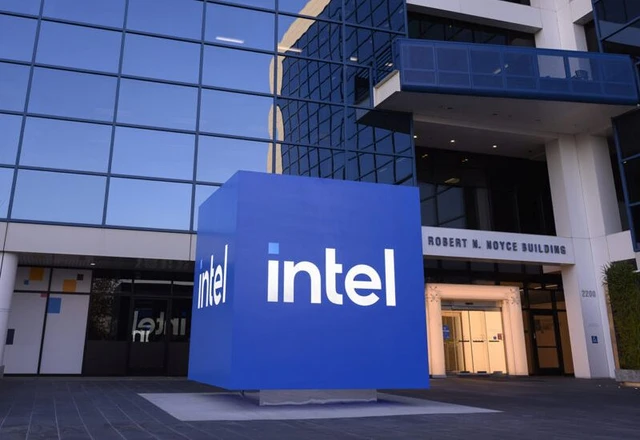
The global semiconductor market is currently navigating a period of radical restructuring—one where leadership in the AI arms race provides no guarantee of workforce stability. As Intel struggles to reconcile its pursuit of technological primacy with the need for financial sustainability, it has once again pivoted toward aggressive headcount optimization. Paradoxically, news of these cuts has served as a catalyst for the company's market valuation, underscoring a clear shift in investor sentiment: operational efficiency is now prized far above corporate scale.
The high-tech industry has entered an era where even the commercial viability of a specific division no longer serves as a shield against workforce reductions. Intel's server segment, which has posted some of its strongest profitability metrics amid the generative AI surge, once again finds itself in the crosshairs. Rumors of impending layoffs within the Data Center Group (DCG) triggered a counterintuitive response from the financial community: the company's shares surged over 8% on the open market, climbing to $105.45 per unit.
This trajectory reflects the distinct logic governing today's Big Tech landscape. Investors view headcount reductions not as a sign of weakness, but as a signal of management's resolve to optimize operational expenditures and expand profit margins. For Intel—a company that has long struggled with a protracted managerial crisis and technological stagnation relative to its rivals—any step toward structural "sanitization" is met with market enthusiasm. Since the beginning of the year, the company's stock value has more than doubled, underscoring growing confidence in current management's strategy to pull the corporation out of its prolonged downward spiral.
Intel's official stance confirms that changes within the DCG are underway. This is not merely a matter of layoffs, but a fundamental structural overhaul designed to ensure long-term viability in the face of fierce competition from NVIDIA and AMD. In an era where performance-per-watt efficiency has become the primary benchmark for success, Intel is forced to transform its internal processes by stripping away bloated managerial layers and inefficient workflows.
The scale of this transformation is ruthlessly ambitious. Over the past few years, the company has executed a series of massive cuts, reducing its workforce from 130,000 employees in 2022 to approximately 83,000 by the end of the first quarter of this year. This represents the loss of nearly a third of its total staff—a process that is evolving Intel from a cumbersome legacy monopolist into a more agile and aggressive competitor.
Despite the general optimism, the market remains cautious. A brief dip in share price during after-hours trading serves as a reminder that the path to true leadership in the AI era requires more than just cost-cutting; it demands genuine technological breakthroughs. Structural optimization is a necessary tool for reclaiming former dominance, but it is not, on its own, sufficient.
 Energy Autonomy: The Extreme Edition