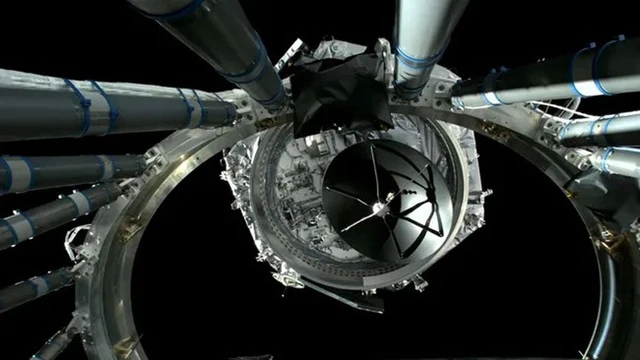
Modern astronomy is undergoing a fundamental paradigm shift, moving away from static snapshots toward the real-time dynamic monitoring of the entire observable universe. The instrumentation of the Vera Rubin Observatory is establishing a new gold standard for precision and scale in deep-space data acquisition, effectively transforming the night sky into a vast, high-fidelity digital laboratory. By capturing millions of celestial objects simultaneously, this capability unlocks a deeper, more nuanced understanding of dark matter and the intricate mechanisms governing galactic evolution. This technological leap enables humanity to perceive the cosmos not as a static tableau, but as a fluid, perpetually evolving process.
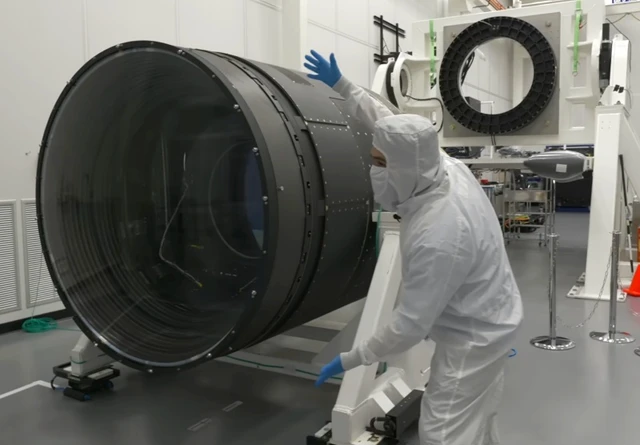
At the heart of this ambitious endeavor lies the LSST camera—one of the most sophisticated optical instruments in scientific history. A true engineering tour de force, the device consists of an array of 189 precision-aligned CCD sensors integrated into a single platform. With a staggering total resolution of 3.2 gigapixels, it captures vast swaths of the sky with unprecedented detail. Weighing approximately three tons and comparable in size to a compact car, the camera is paired with the 8.4-meter Simonyi Survey Telescope as its primary lens.
The system's primary objective extends beyond merely capturing ultra-high-definition imagery; it is designed for the systematic scanning of the heavens. Over the next decade, the observatory will produce roughly 700 high-resolution exposures every night. This methodology transforms astronomy from a discipline of "isolated discoveries" into a comprehensive big-data analysis, where every fluctuation in the cosmic structure is recorded and cataloged.
One of the system's early triumphs is the imaging of the COSMOS (Cosmic Evolution Survey) Deep Field. This region has long served as a gold standard for researchers; between 2003 and 2005, it was under the intense scrutiny of the Hubble Space Telescope, making it one of the most thoroughly studied patches of space. By synthesizing hundreds of individual observations, the LSST image has visualized over half a million distant galaxies, creating a detailed map of matter distribution across this sector.
The COSMOS field serves as an ideal calibration ground, containing millions of identified objects of varying types and ages. Thanks to the LSST camera's extraordinary resolution, scientists can now track galactic evolution in real-time. This enables the detection of transient phenomena—short-lived bursts such as supernovae or other catastrophic cosmic events that previously went unnoticed due to insufficient observation frequency.
To grasp the true scale of the captured space, one must compare it to our own galaxy. The visible disk of the Milky Way spans approximately 120,000 light-years in diameter, though including the dark matter halo, this boundary may extend up to 1.9 million light-years. The LSST camera is capable of encompassing volumes that far exceed these dimensions, transforming disparate points of light into a structured narrative of the universe's evolution.
These current results are merely the starting point. In the coming years, repeated imaging of the same celestial regions will allow for the creation of a comprehensive time-series dataset. This will provide the scientific community with an unparalleled tool for discovering new objects and analyzing variable stars, effectively producing a "motion picture" of cosmic life spanning millions of years.
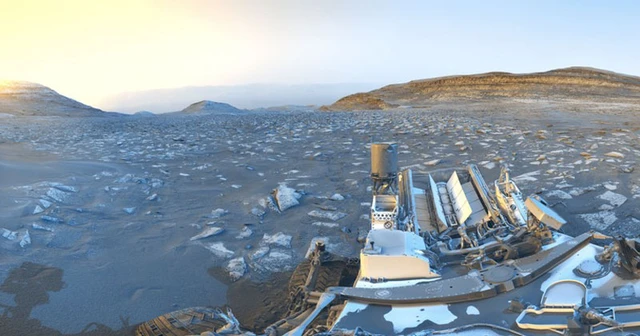 The 5,000-Day Milestone of Martian Exploration