For too long, the autonomous vehicle industry has operated within the vacuum of "ideal" driving scenarios, largely overlooking the unpredictable chaos of real-world urban environments. Yet, as these algorithms have begun to clash with the operational realities of emergency services, a perilous disconnect has emerged between technological ambition and practical safety. U.S. regulators are now explicitly labeling the failure of autonomous systems to respond correctly to emergency responders as a critical functional flaw—a precedent that casts serious doubt on whether these systems are truly ready for full-scale integration into the urban fabric.
The challenge of how autonomous vehicles interact with law enforcement and emergency services has evolved from a series of isolated technical glitches into a systemic risk. The U.S. National Highway Traffic Safety Administration (NHTSA) has identified a troubling pattern: driverless cars are systematically obstructing ambulances and fire engines, effectively blocking critical lifelines during emergencies.
At the heart of the issue are so-called "edge cases"—scenarios that are rarely represented in neural network training sets but prove critical in real-world applications. According to the agency, modern autopilot systems are often "blind" to the fundamental markers of an emergency. This includes an inability to recognize flashing beacons, signal flares, smoke, or even the standard traffic cones used by police to cordon off accident scenes.
From the regulator's perspective, such algorithmic myopia is not an acceptable margin of error. NHTSA Administrator Jonathan Morrison has explicitly defined the failure to react adequately to first responders as a functional flaw. In a world where seconds determine survival rates, a vehicle that cannot yield to a fire truck or recognize a police perimeter ceases to be a technological achievement and instead becomes a heightened public safety hazard.
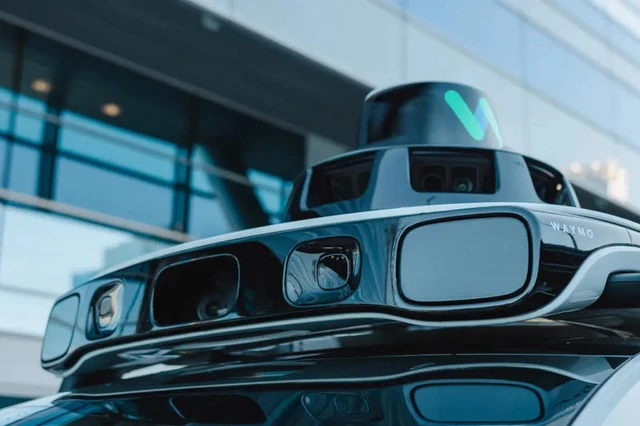
Empirical evidence underscores the gravity of the situation. In Dallas, Texas, a Waymo autonomous vehicle partially obstructed a road while fire crews were rushing to a burning apartment complex. Such incidents are becoming recurring themes; video footage has captured autonomous cars blocking ambulances or drifting into active police zones, ignoring established signs and signals.
Even more alarming are the instances where object recognition failures lead to tragedy. In Santa Monica, California, a Waymo vehicle struck a nine-year-old girl crossing the street. The situation was exacerbated by a double-parked SUV that limited the vehicle's field of vision—yet another example of how common road anomalies can baffle computer vision systems.
In response to these challenges, the NHTSA is initiating a series of consultations with leading autopilot developers. The goal of these meetings is to establish a unified technical standard that ensures autonomous vehicles interact with emergency services safely and predictably. It is becoming clear that the industry must pivot from simple lane-following to a deep, contextual understanding of road dynamics, where the primacy of human life is hard-coded at the most fundamental level.
 The Global Triumph of Chinese Electric Mobility