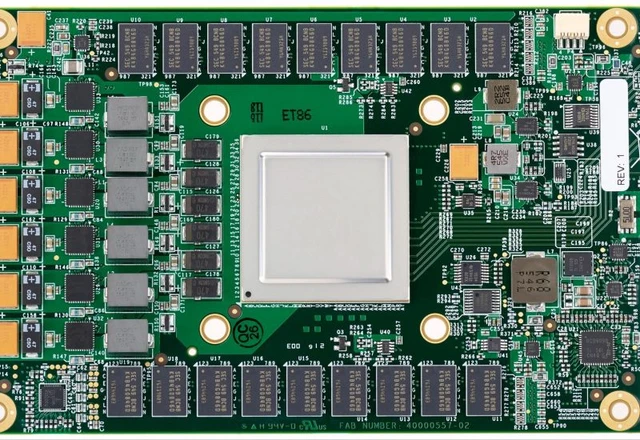
The global AI arms race has triggered an unprecedented crunch in manufacturing capacity. Today, even titans like Samsung are hitting the ceiling of their most advanced production lines. The saturation of its 4nm process is forcing the company to recalibrate its client engagement strategies and explore alternative scaling pathways. Central to this pivot is a shift toward more mature nodes—solutions capable of striking an optimal balance between raw performance and cost-effectiveness.
The global semiconductor market is currently navigating a period of significant turbulence, driven by an explosive surge in demand for AI computing power. Samsung’s 4nm production lines are now fully committed through 2027. This shortage stems from two primary catalysts: the rapid escalation of orders for High Bandwidth Memory (HBM4) and an unexpectedly high demand for specialized LPU processors tailored for Nvidia's Grok-3.
This situation has created a systemic bottleneck, where technological ambition has collided with the physical constraints of available hardware. With 4nm lines operating at peak capacity, Samsung has pivoted to offering clients the 5nm process as a viable alternative. While a shift back in nanometers might appear regressive on the surface, from an industry perspective, it is a calculated pragmatic move. The 5nm node is a mature technology, boasting consistently high yields and significantly lower manufacturing risks.
For fabless firms, transitioning to cutting-edge 2nm or 3nm processes entails astronomical costs and a high probability of defects during the early stages of adoption. In this context, the 5nm solution emerges as the optimal compromise, delivering high-performance silicon without an unsustainable spike in production costs.
A pivotal role in this ecosystem is played by the specialized SF5A node. Originally positioned as a solution for the automotive sector, it has become the foundation for Advanced Driver Assistance Systems (ADAS), which Hyundai Motor Company intends to integrate into mass production by 2030. Beyond automotive applications, SF5A is powering SoCs for Bose Semiconductor and Telechips Dolphin 7 processors. Today, however, the utility of this process has expanded far beyond the cockpit, extending into server-grade solutions and high-performance Neural Processing Units (NPUs).
The geopolitical landscape is also tilting in favor of the South Korean giant. Fierce competition and capacity constraints at Taiwan's TSMC, coupled with US sanctions on China's tech sector, have created a vacuum that Samsung is poised to fill. Chinese and Indian developers, restricted from accessing certain cutting-edge TSMC capacities, view Samsung’s 5nm lines as the only realistic pathway to achieving the necessary performance benchmarks for their devices.
Consequently, Samsung is transforming a production crisis into a strategic lever. By accepting even small-batch orders that TSMC declines, the company is not only optimizing plant utilization but also expanding its footprint across emerging technological powers, building a resilient infrastructure for the next cycle of semiconductor growth.
 The Price of Acceleration: CXMT’s Rapid Push into Memory