The modern gaming industry is currently witnessing a violent collision between sweeping ambitions and the cold, hard reality of economics. Microsoft attempted to fundamentally reshape the landscape, seeking to pivot AAA gaming toward a streaming-centric model—a gamble that cost the company tens of billions of dollars. Yet, the "Netflix for games" vision proved untenable, buckling under the weight of ingrained consumer habits and systemic hardware limitations. Today, the company is enduring a painful period of correction, manifesting in sweeping layoffs and a comprehensive strategic pivot.
Over the last decade, Microsoft has executed one of the most aggressive acquisition sprees in the history of the entertainment industry. With nearly $80 billion deployed, the corporation consolidated iconic franchises, including Call of Duty and Skyrim, under its umbrella. This expansion was predicated on a high-stakes bet on Game Pass—a subscription service envisioned as the primary growth catalyst, designed to pivot gamers away from one-time purchases toward a recurring monthly payment model.
However, reality has starkly diverged from projections. Instead of the anticipated 77 million users by 2026, the service has plateaued and subsequently contracted; the current audience of 30 million falls short of 2024 figures. An attempt to stabilize the situation via a 50% price hike only served to exacerbate user churn.
The core of the problem lies in the fundamental divergence between the consumption of video content and video games. While Netflix offers thousands of titles that can be consumed passively or episodically, gaming demands deep immersion. Most players prefer a handful of flagship titles to which they return for years, rather than an infinite library of mediocre offerings. The statistics are relentless: a significant portion of the audience purchases no more than two games per year, rendering the "all-inclusive" concept economically unsustainable for the AAA segment.
Xbox's drive to close the gap with the Sony PlayStation and Nintendo ecosystems led to a precarious misalignment. The division became bloated with studios and personnel producing content that failed to resonate with the audience. This internal crisis reached a breaking point when leadership admitted the business model had become "unhealthy" and the company had lost its strategic compass.
A particularly glaring failure was the strategy of content devaluation. Releasing high-budget blockbusters on Game Pass on day one effectively eroded the perceived value of the product. Why pay $70 for a new Call of Duty when access to it, and hundreds of other titles, costs a fraction of that price? The result was disastrous: in 2024, Microsoft lost over $300 million in Call of Duty sales on its own platforms, while the vast majority of Black Ops 6 copies were sold within the PlayStation ecosystem.
Parallel to the software crisis, hardware headwinds emerged. For years, Microsoft subsidized console production, selling hardware at a loss to expand its user base. This "razor-and-blade" strategy has ceased to be viable. A memory chip shortage, triggered by the global AI boom, coupled with new trade tariffs, has made Xbox production even more costly. Consequently, the price of the next-generation console, codenamed Project Helix, could exceed $1,000, further alienating the mass market.
The appointment of Asha Sharma as head of Xbox marked the beginning of an era of "aggressive optimization." The new leadership is pivoting away from volume-driven growth in favor of quality and exclusivity. The first radical step was the decision to stop releasing new Call of Duty installments on Game Pass on day one. The company is returning to a traditional retail paradigm: to play the biggest hits, the user must purchase the console.
The restructuring also overhauled the organizational hierarchy. The most profitable assets, such as Mojang (Minecraft) and King (Candy Crush), have moved under direct executive oversight, while less efficient studios were shuttered. In total, this "strategic pivot" resulted in the departure of 3,200 employees—one-fifth of the total workforce.
Xbox no longer views Game Pass as the singular driver of its evolution. While the service remains a vital component of the ecosystem, it is now supplementary to, rather than a replacement for, the traditional sales model. Microsoft is attempting to strike a balance between content accessibility and commercial value, having realized that in the world of prestige gaming, free access cannot replace the desire for exclusive ownership.
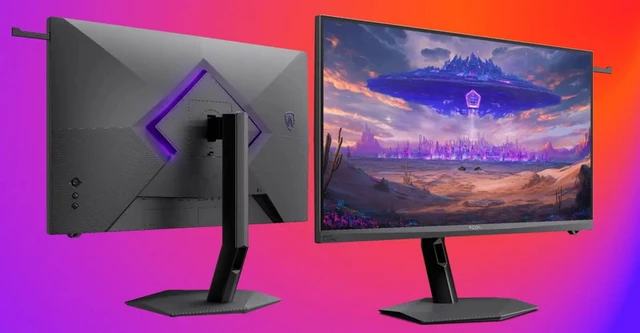 The Pinnacle of Clarity: AOC's New 5K Monitor