The global corporate landscape is undergoing a harsh reality check following a period of blind faith in the capabilities of artificial intelligence. The initial euphoria triggered aggressive workforce reductions, driven by the mistaken belief that human expertise had become redundant. However, the chasm between synthetic benchmarks and real-world operational demands has proven insurmountable. Today, industry titans are being forced to concede that cognitive agility and ethical judgment remain the exclusive domain of human intelligence.
The modern labor market is undergoing a painful correction. According to recent research from Orgvue, nearly 40% of executives at major corporations opted to downsize their workforce, banking on the promises of automation and AI. However, shortly thereafter, more than half admitted that this move was a strategic blunder. This phenomenon exposes a fundamental rift between the marketing hype of AI developers and the harsh operational reality.
Ford Motor provides one of the most telling examples. In an attempt to optimize its engineering headcount via algorithms, the company suffered a sharp decline in product quality. The issue was a classic data trap: models that performed flawlessly on training sets proved powerless against real-world production conditions. It became evident that "sterile" data fails to account for the variability and chaos of live manufacturing, forcing the company to urgently rehire hundreds of skilled engineers.
A similar scenario unfolded in the financial sector with Commonwealth Bank. Replacing support staff with AI voice assistants triggered a surge in customer dissatisfaction. While the technology could handle linear queries, it failed completely in complex user scenarios requiring empathy and lateral thinking. The bank's experience reinforces the premise that the human-machine interface is still unable to fully replace human intelligence where context outweighs the algorithm.
IBM’s trajectory is particularly intriguing; the company plans to significantly scale up its US hiring by 2026 following a failed experiment in HR automation. The statistics here are deceptively optimistic: AI successfully handled 94% of routine personnel requests. However, the critical remaining 6%—cases requiring ethical analysis, deep psychological insight, and accountability for decisions—remained entirely beyond the model's reach. In business, it is often these "residual" percentages that determine an organization's viability and internal culture.
Analyzing these events reveals a recurring pattern of corporate miscalculation. Companies overestimated AI autonomy while underestimating the complexity of real-world business challenges. The primary error lay in attempting to automate roles that demand flexibility, emotional intelligence, and the ability to navigate ambiguity.
Ultimately, the industry is reaching a consensus: artificial intelligence is a powerful tool for augmenting human capabilities, not a wholesale replacement for them. System efficiency remains capped by data quality and a lack of genuine contextual understanding. True digital transformation is achieved not through headcount reduction, but through the creation of a symbiosis where routine is delegated to the machine, while strategic judgment and empathy remain firmly in human hands.

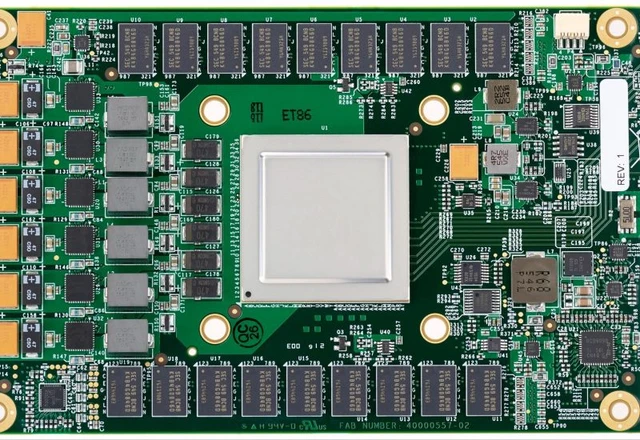 Anthropic’s Strategic Push for Hardware Independence