The global smartphone market has entered a phase of structural transformation, where raw quantitative growth has given way to an aggressive struggle for market share. The decline in overall sales volume, set against the backdrop of a systemic component crisis, exposes a profound divide between budget-tier offerings and premium players. Amidst memory shortages and logistical disruptions, corporate survival is no longer dictated by shipment volumes, but by the resilience of supply chains. Current dynamics point toward the emergence of a new hierarchy—one where pricing power has become the primary competitive advantage.
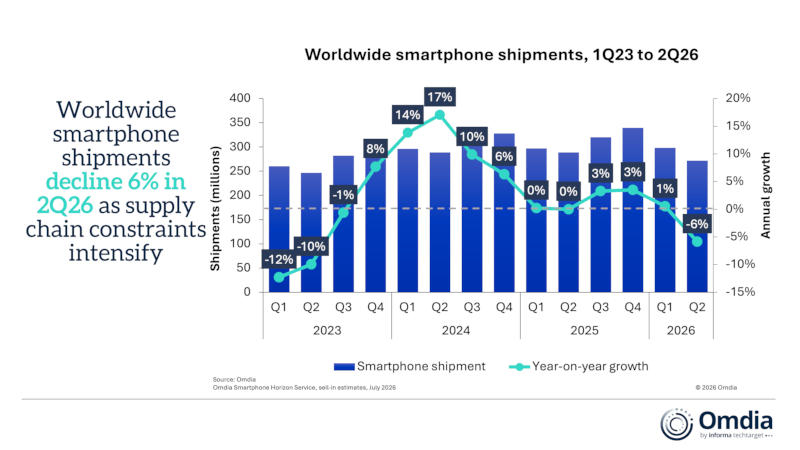
The global mobile device market has entered a period of palpable contraction: second-quarter sales volume declined by 6%, sliding to 272 million units. This stagnation is not a mere fluctuation but rather the manifestation of a profound crisis within the semiconductor industry. A shortage of memory chips coupled with the skyrocketing cost of base components has created a scenario where supply chain disruptions will remain a systemic factor until at least the end of 2026.
The impact has been most acute for manufacturers targeting the mass-market budget segment. Xiaomi and Oppo, whose business models traditionally rely on the high turnover of affordable devices, recorded shipment drops of 26% and 17%, respectively. Forced price hikes and a streamlined product lineup have effectively alienated the entry-level consumer. In the near term, budget smartphones are expected to face the most aggressive pricing pressures.
Against this backdrop, Samsung’s strategy has demonstrated a paradoxical efficiency. Although the company's mobile division recorded its first quarterly loss in history due to rising operational expenditures, its overall market share grew by 22%, with sales reaching 60.5 million units. The secret to the corporation's resilience lies in its vertical integration: Samsung serves as one of the primary suppliers of RAM and NAND flash memory. Amidst the artificial intelligence boom, the demand for specialized AI accelerator chips is effectively offsetting losses in the mobile segment, providing the company with a critical financial cushion.
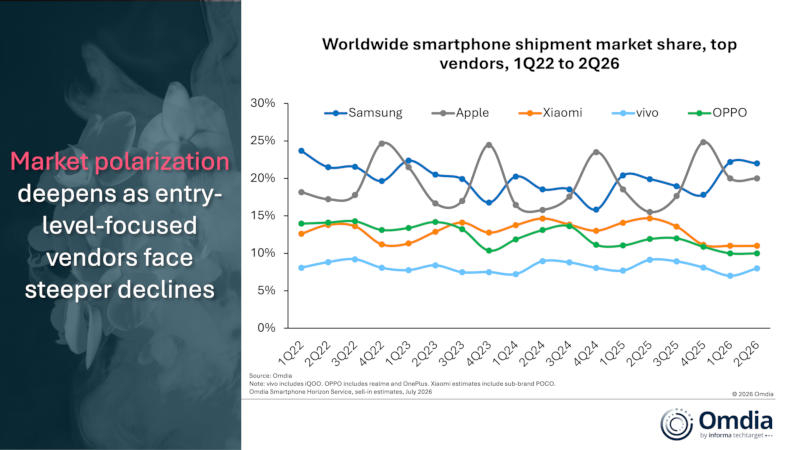
Apple, meanwhile, continues to showcase the phenomenal resilience of the premium segment. The second quarter stands as the most successful in the company's history: iPhone shipments reached 55.1 million units—a 23% year-over-year increase—pushing its market share up to 20%. The iPhone 17 lineup played a pivotal role in this success, allowing the brand to maintain premium pricing even amidst a general market downturn. To further stimulate demand, Apple is implementing innovative financial instruments, such as leasing programs, which lower the barrier to entry for consumers without devaluing the product's intrinsic price point.
The overarching market picture suggests that the era of expansion driven by low-cost devices has come to an end. In the coming years, leadership will be maintained by those players capable of synthesizing three critical factors: pricing power, absolute supply chain robustness, and commercial agility. Victory in this race will not be claimed by whoever sells the most units, but by whoever can preserve margins in an environment of global resource scarcity.
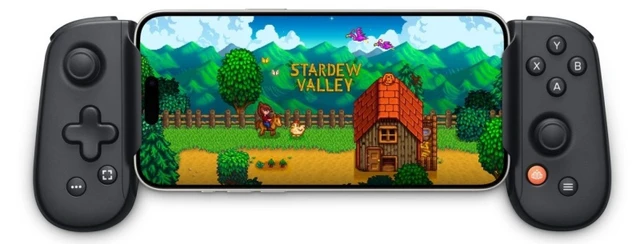 Apple’s Strategic Foray into the Gaming Controller Market